
Looking to end daily power struggles? Discover 5 small, actionable positive parenting habits that will transform your home, reduce tantrums, and foster deeper connection with your children starting today.
Parenting often feels like an all-or-nothing endeavor. We read books detailing grand philosophies, vow never to raise our voices again, and set ambitious goals for peaceful, structured homes. But within a few days—or even hours—the chaotic reality of daily life sets in, and those big resolutions dissolve into survival mode.
Here is the liberating truth: radical transformation in parenting rarely comes from massive overhauls. It comes from tiny, consistent habits.
When you shift your focus from changing your entire parenting style overnight to adopting micro-habits, the emotional climate of your home changes dramatically. Here are five small, powerful habits you can start practicing today to transform your relationship with your children.
1. The “First 3 Minutes” Welcome
Think about how you react when you see your child after a separation—whether waking up in the morning, picking them up from school, or returning home from work. Are you immediately jumping into logistics (“Get your shoes,” “Did you eat your lunch?”), checking your phone, or offering genuine, warm connection?
The First 3 Minutes Rule suggests that your energy during the first three minutes of reconnecting sets the emotional tone for your child’s state and behavior for hours to come.
- How to practice it: Put your phone away, drop down to their eye level, smile, and offer physical affection or a warm greeting before making any demands or asking about their day.
- Why it works: Children thrive on emotional safety. Greeting them with pure delight signals that they are valued for who they are, not just what they accomplish or clean up.
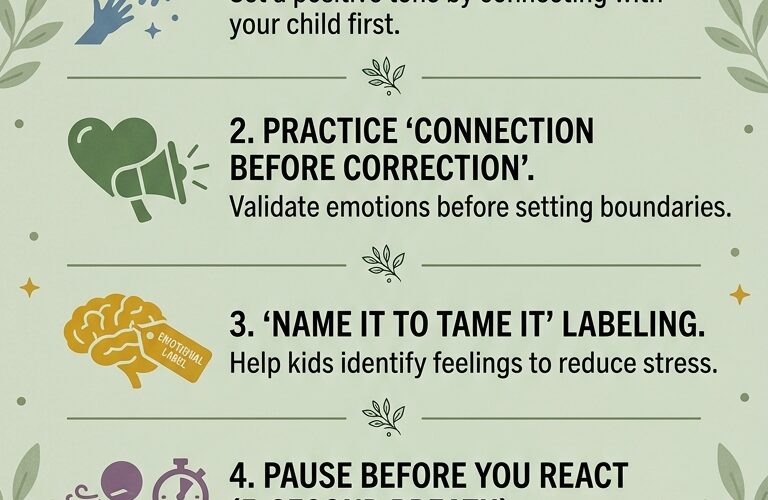
2. Practice “Connection Before Correction”
When a child acts out, our knee-jerk instinct is to correct the behavior immediately. We instruct, lecture, or discipline while emotions are running high. However, a child’s brain in a state of stress or frustration cannot receive logic; the emotional brain (limbic system) has hijacked the rational brain (prefrontal cortex).
By prioritizing connection before correction, you calm their nervous system so they can actually learn from the boundary you set.
“A child cannot hear your message of guidance until they feel secure in your presence. Calm feelings lead to cooperative behaviors.”
- How to practice it: Soften your voice, offer a gentle touch on the shoulder, and validate their emotion before addressing the behavior. Say: “I see you’re angry that screen time is over. It’s hard to stop playing. But it is time to turn off the TV.”
- Why it works: Validation does not mean approval of bad behavior; it means acknowledging their internal experience so they feel understood rather than defensive.
3. Use “Name It to Tame It” Emotional Labeling
Big emotions are terrifying for young children (and even teens). When feelings like jealousy, frustration, or disappointment overwhelm them, they lack the vocabulary to articulate what is happening inside. This often manifests as meltdowns, kicking, or slamming doors.
Coined by Dr. Daniel Siegel, the concept of “Name It to Tame It” involves helping children name their emotions to lower their physiological stress response.
- How to practice it: Instead of saying “Stop throwing a fit,” try labeling the feeling neutrally: “You wanted that toy so badly, and you feel frustrated that your brother is using it.”
- Why it works: Labeling emotions engages the prefrontal cortex, reducing the intensity of the emotional reaction and building lifelong emotional intelligence (EQ).
4. Pause Before You React (The 5-Second Breath)
Parenting triggers are real. Spilled milk on a clean floor, prolonged whining, or sibling arguments can trigger an immediate fight-or-flight response in parents. In those moments, we often react out of our own dysregulation rather than responding intentionally.
The habit of taking a 5-second conscious breath builds a crucial gap between stimulus and response.
- How to practice it: When you feel your chest tighten or your voice rise, pause. Place a hand on your heart or belly, inhale deeply for 4 seconds, and exhale for 5 seconds before speaking.
- Why it works: Co-regulation works both ways. You cannot calm a dysregulated child with a dysregulated nervous system. Taking a breath grounds you first so you can lead with calm authority.
5. End the Day with One Unfiltered Gratitude
At the end of a long, exhausting day, it is easy to reflect only on what went wrong—the tantrums, the messy house, the unfinished chores. This negative bias fuels parental burnout and feelings of inadequacy.
Ending the day by sharing one specific, positive moment with your child rewires your brain (and theirs) to focus on joy and attachment.
- How to practice it: During bedtime routines, share one specific thing you loved doing with them that day: “My favorite part of today was laughing with you when we built that pillow fort.”
- Why it works: It ensures that the last memory of the day is grounded in love and positive connection, fostering deeper sleep and stronger parent-child trust.
Start Small, Win Big
You do not need to implement all five of these habits today. Choose just one to focus on for the next week. Master the 3-minute welcome or commit to the 5-second breath when frustration strikes.
Parenting isn’t about perfection; it’s about direction and connection. Small, consistent shifts create massive long-term transformations. Which habit will you try today?
