Every parent knows the feeling. You need 20 uninterrupted minutes to make dinner, respond to a work email, or simply sip a cup of coffee while it’s still hot. You turn to your energetic toddler, only to realize their attention span lasts roughly four seconds per toy.
The good news? You don’t need expensive gadgets, elaborate setups, or endless screen time to keep your toddler happily engaged.
The secret to toddler activity success lies in simplicity and open-ended play. Young children are naturally curious about everyday objects, textures, and sensory experiences. With a few household items, you can create captivating play stations that foster independence, develop fine motor skills, and—best of all—buy you precious guilt-free hours.
Here are 15 simple, budget-friendly toddler activities designed to keep those little hands busy and big imaginations working.
Low-Mess Sensory Play
Sensory activities are top-tier boredom busters. They spark curiosity, encourage problem-solving, and keep toddlers deeply focused.
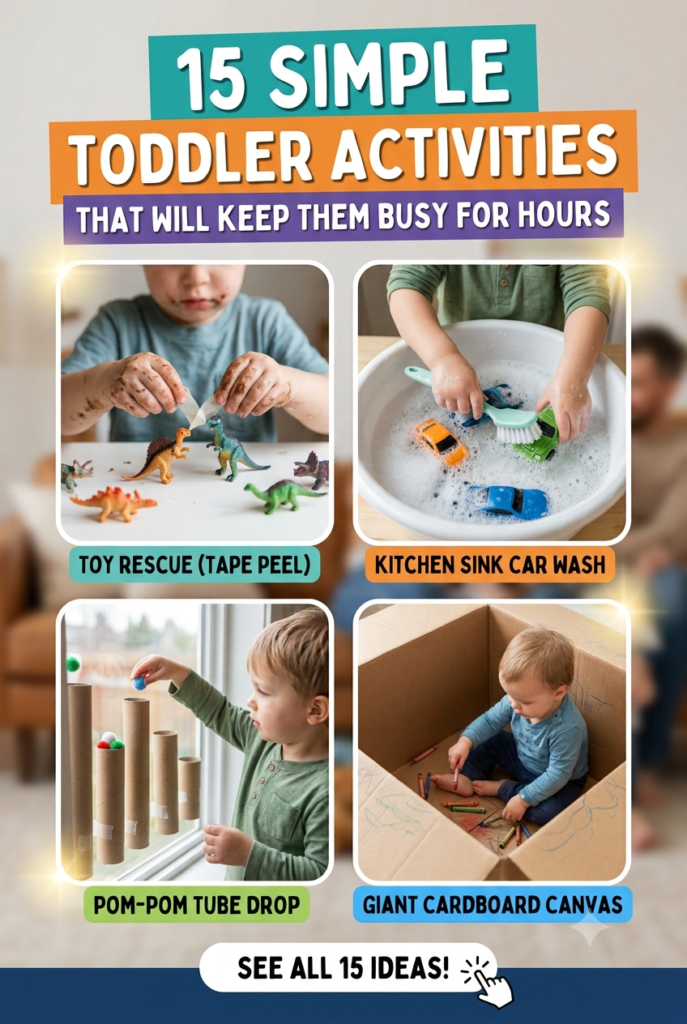
1. The Great Toy Rescue (Tape Ice Breakout)
Take a few of your toddler’s favorite plastic animals or action figures and painter’s tape them securely to a cookie sheet or the floor.
- The Goal: Challenge your child to “rescue” their trapped toys by peeling off the tape.
- Why it works: Peeling tape builds finger strength and fine motor control, keeping them concentrated as they work to free every last dinosaur.
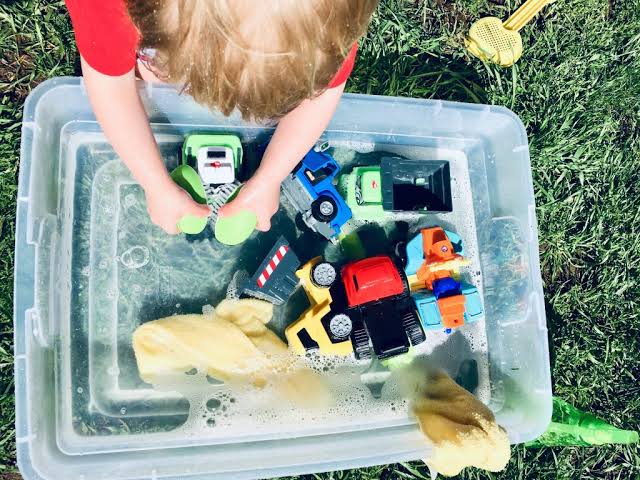
2. The Kitchen Sink Car Wash
Transform everyday dishwashing into an exciting event. Fill a low plastic tub or your kitchen sink with warm, soapy water. Add a scrub brush, a washcloth, and a fleet of plastic toy cars.
- The Goal: Give every car a thorough wash and dry.
- Why it works: Toddlers are obsessed with water play. Adding a specific “job” gives them a sense of purpose and pride.
3. Dry Pasta Sorting Station
Grab a muffin tin, a few plastic bowls, and a mix of dry pasta shapes (penne, macaroni, bow-tie).
- The Goal: Let your toddler sort the pasta by shape using their fingers, a big spoon, or plastic tongs.
- Why it works: Sorting promotes early math skills and spatial awareness while refining hand-eye coordination.
4. Color Sorting with Sticky Contact Paper
Tape a piece of clear contact paper (sticky side facing out) to a wall or window at toddler height. Provide a bowl of colorful pom-poms, scrap paper, or foam shapes.
- The Goal: Let your toddler stick objects to the wall and peel them off again.
- Why it works: It’s completely mess-free, sticky sensory fun that works their upper-body muscles while standing.
Gross Motor & High-Energy Activities
Got a toddler bouncing off the walls? Turn that endless energy into structured play with these indoor physical activities.
5. Floor Tape Roadways & Mazes
Using low-tack painter’s tape, map out a network of roads, tracks, and zig-zags across your living room rug or hardwood floor.
- The Play: Hand over a few toy cars, push-toys, or even let them balance along the lines like a tightrope.
- Why it works: It turns your floor into an interactive playground that ignites imaginative story-driven play.
6. Indoor Balloon Tennis
Blow up a couple of bright balloons and hand your toddler a fly swatter, a paper plate taped to a paint stirrer, or just their hands.
- The Goal: Keep the balloon off the ground!
- Why it works: Balloons move slowly, giving toddlers enough reaction time to successfully hit them, boosting their confidence and burning off excess energy safely.
7. Couch Cushion Obstacle Course
Transform your living room furniture into a mini ninja warrior course using sofa cushions, pillows, and rolled-up blankets.
- The Play: Guide your child to crawl over the “mountains,” step inside taped boxes, and jump onto safe pillow landing pads.
- Why it works: Physical challenges tire out active toddlers while improving balance, spatial awareness, and body control.
Fine Motor & Cognitive Skill-Builders
Fine motor activities engage a toddler’s focus, promoting calm, quiet independent play.
8. Cardboard Box & Pipe Cleaner Colander
If you have a plastic kitchen colander or a sturdy cardboard box with poked holes, hand it to your toddler along with a pack of colorful pipe cleaners.
- The Goal: Thread the pipe cleaners through the holes to create crazy shapes, bridges, or sculptures.
- Why it works: The precision required to thread small holes captures intense focus and builds the finger muscles needed for pencil holding later on.
9. Post-it Note Treasure Hunt
Hide bright Post-it notes around a single room at eye level—on chair legs, cabinet doors, toy bins, or walls.
- The Goal: Send your toddler on a mission to hunt down and collect every sticky note.
- Why it works: It feels like a high-stakes game of hide-and-seek, but requires zero preparation from you.
10. The Pom-Pom Tube Drop
Painter’s tape a few empty paper towel and toilet paper tubes vertically to a wall or glass door at different angles. Place a bowl of pom-poms underneath.
- The Goal: Drop pom-poms into the top of the tubes and watch them race out the bottom into a catching bowl.
- Why it works: Toddlers learn basic concepts of cause, effect, and gravity through endless repetition.
Creative & Imaginative Play
Encouraging imaginative play helps toddlers develop language skills, empathy, and creative problem-solving.
11. Giant Cardboard Box Canvas
Before you toss out that giant delivery box, open it up or pop your toddler right inside it with a box of washable crayons or markers.
- The Play: Let them go wild decorating the walls, floor, and ceiling of their “secret fort.”
- Why it works: Coloring outside the lines on an enormous canvas feels delightfully rebellious and breaks the novelty barrier of regular paper.
12. Animal Snack Time (Feeding Station)
Draw a large animal face (like a bear or monster) on a shoe box, complete with an open mouth cutout.
- The Goal: Give your toddler a bowl of “food” (large buttons, wooden blocks, or plastic play food) to feed the hungry animal.
- Why it works: Pretend play paired with a targeted posting task keeps toddlers entertained through storytelling and physical repetition.
13. Sticker Station Transfer
Peel the outer background paper off a sheet of stickers so your toddler can easily grab the individual stickers independently. Give them a piece of paper, a plastic cup, or even a sheet of aluminum foil.
- The Goal: Cover the target object in as many stickers as possible.
- Why it works: Removing the frustration of peeling stickers empowers toddlers to play without constantly asking for help.
Mess-Free Art & Exploration
Art doesn’t always have to end with paint on your dining room chairs.
14. Mess-Free Ziploc Painting
Squirt two or three contrasting colors of washable paint inside a heavy-duty gallon Ziploc bag. Seal it tightly (add duct tape along the top for safety) and tape the bag flat to a table or window.
- The Goal: Let your toddler squish, spread, and trace shapes into the paint with their fingers.
- Why it works: They get all the sensory joy of color mixing and squishy textures without a single drop of paint touching your furniture.
15. Ice Cube Water Painting
Freeze water tinted with a couple of drops of food coloring into an ice tray (insert popsicle sticks before freezing for easy handles). On a warm day outside or over a thick piece of cardboard indoors, let your toddler paint with the melting ice.
- The Goal: Glide the colorful ice blocks across the surface to create melting watercolor masterpieces.
- Why it works: The temperature shift, vivid colors, and changing state of matter offer rich sensory feedback that keeps toddlers hooked.
Tips for Toddler Activity Success
To get the most out of these independent play ideas, keep these three rules in mind:
- Set Up Before Introducing: Have the activity fully ready before bringing your toddler into the room. Anticipation builds engagement.
- Step Back Early: Once you explain the simple rule, step away. Resisting the urge to direct their play helps them build true independence.
- Rotate, Don’t Overwhelm: Don’t present all these ideas at once. Introduce one activity per day, and pull them out only when you need dedicated quiet time.
With just a few basic household items, you can transform chaotic afternoons into productive, engaging play sessions for your toddler—and buy yourself the break you deserve!