
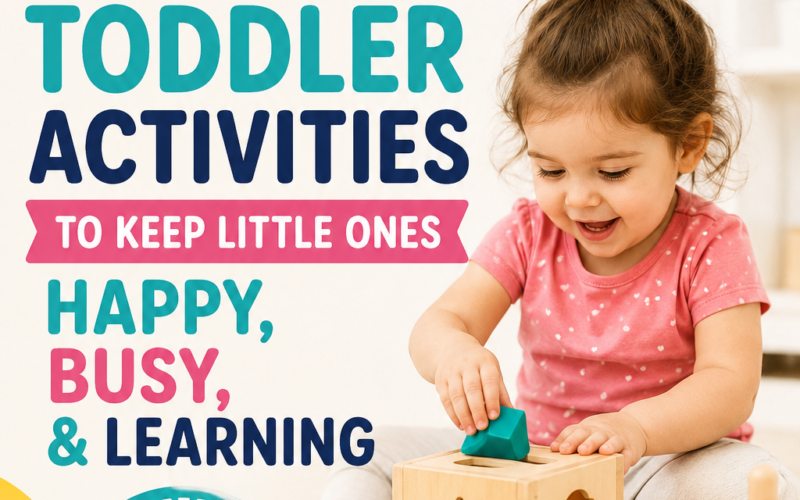
Keeping toddlers entertained can sometimes feel like a full-time job. At this age, little ones are naturally curious, energetic, and eager to explore everything around them. The good news is that you do not need expensive toys or complicated setups to keep them engaged. Simple toddler activities using everyday household items can provide hours of fun while helping children develop important early skills.
Whether you are looking for indoor toddler activities, learning activities, or easy ideas for a quiet afternoon at home, these activities are simple, affordable, and easy to adapt to your child’s age and abilities.
1. Color Sorting
Gather objects in a few different colors, such as large blocks, plastic cups, or colorful toys. Place them in separate groups according to their colors.
Color sorting helps toddlers recognize colors while developing early categorization and thinking skills.
2. Homemade Playdough Fun
Homemade or store-bought playdough can provide plenty of creative entertainment. Let your toddler roll, flatten, squeeze, and shape the dough.
You can add child-safe cookie cutters or large plastic tools for extra fun. Playdough activities can strengthen little hands and support fine motor development.
3. Sticker Art
Give your toddler a sheet of large, age-appropriate stickers and a piece of paper. Let them create their own picture by placing stickers wherever they like.
This simple activity encourages creativity, hand-eye coordination, and independent play.
4. Water Transfer Activity
Fill two containers with a small amount of water and provide cups or large spoons. Encourage your toddler to transfer water from one container to another.
Always supervise water activities closely. This activity can help children practice coordination while introducing simple concepts about volume and movement.
5. Indoor Obstacle Course
Create a simple obstacle course using cushions, pillows, blankets, and safe furniture. Your toddler can walk around objects, crawl under a blanket tunnel, or step over cushions.
Indoor obstacle courses are excellent gross motor activities that encourage movement and balance.
6. Nature Treasure Basket
Collect safe items from nature, such as large leaves, pinecones, smooth stones, or sticks. Place them in a basket and allow your toddler to explore them.
Talk about the colors, shapes, textures, and sizes of each object to turn the activity into a simple learning experience.
7. Building Blocks
Building blocks are classic toddler toys for a reason. Encourage your child to build towers, houses, bridges, or anything they can imagine.
Building supports problem-solving skills, coordination, creativity, and early spatial awareness.
8. Homemade Musical Instruments
You can make simple instruments using household objects. For example, fill a tightly sealed container with dry rice to create a shaker.
Let your toddler experiment with different sounds while you sing songs together. Make sure all containers are securely closed and cannot be opened by your child.
9. Finger Painting
Set up a small painting area with washable, child-safe paint and large sheets of paper. Let your toddler experiment with different colors and patterns.
Finger painting encourages sensory exploration and creativity while allowing children to express themselves freely.
10. Matching Games
Create simple matching cards by drawing pairs of identical objects or printing simple pictures. Place the cards face up and ask your toddler to find matching pairs.
For younger toddlers, start with only two or three pairs. Gradually add more as their skills improve.
11. Storytime With Props
Choose a favorite children’s book and add simple props related to the story. If the book is about animals, for example, use toy animals while reading.
Ask simple questions such as, “Where is the dog?” or “What sound does the cow make?” This can make reading more interactive while supporting language development.
12. Kitchen Helper Activity
Toddlers often love helping adults with everyday tasks. Give your child a simple, safe job while you prepare food, such as washing fruits, stirring ingredients with supervision, or placing napkins on the table.
This can help children feel involved while teaching practical skills.
13. Pom-Pom Sorting
Use large craft pom-poms and several containers to create a sorting game. Ask your toddler to place items into containers based on color or size.
Only use materials that are too large to swallow and supervise closely, especially with younger toddlers.
14. Dance Party
Put on some children’s music and have a mini dance party. Encourage your toddler to jump, clap, spin, march, or copy your movements.
Dancing is a fun way to promote physical activity while developing rhythm and coordination.
15. Simple Puzzle Time
Age-appropriate puzzles are wonderful toddler learning activities. Start with puzzles containing just a few large pieces.
Help your child identify shapes and pictures and encourage them to try different pieces. Avoid solving the puzzle for them immediately; give them time to experiment.
16. Toy Wash Station
Set up a small basin with water and a few washable toys. Give your toddler a cloth or sponge and let them pretend to wash the toys.
This activity combines pretend play with sensory exploration and can keep little hands busy for quite a while. Closely supervise all water play.
17. Paper Tearing and Collage
Give your toddler pieces of colored paper and let them tear the paper into smaller pieces. Help them glue the pieces onto another sheet to create a collage.
Tearing paper can strengthen hand muscles, while the collage encourages creativity and artistic exploration.
18. Animal Movement Game
Call out an animal and encourage your toddler to move like that animal. They might hop like a bunny, walk like a bear, or flap their arms like a bird.
This activity encourages imagination and physical movement while helping children learn about animals.
19. Shape Hunt
Choose a simple shape, such as a circle, and walk around the house looking for objects with that shape.
You can search for plates, clocks, wheels, or other familiar objects. This turns everyday surroundings into a fun early-learning activity.
20. Sensory Bin
Create a simple sensory bin using safe materials appropriate for your child’s age. You might use large objects with different textures and encourage your toddler to touch, compare, and explore them.
Talk about whether each item feels smooth, rough, soft, hard, heavy, or light. Always supervise sensory play and avoid small objects that could present a choking hazard.
How to Make Toddler Activities More Engaging
The best toddler activities do not need to be complicated. In fact, simple activities often give children more opportunities to use their imagination.
Try following your child’s interests. If your toddler loves animals, create animal-themed games. If they enjoy colors, focus on sorting and painting. If they have lots of energy, choose activities involving movement.
You can also turn everyday routines into learning opportunities. Counting toys, identifying colors while getting dressed, or talking about shapes during a walk can all support early development.
Most importantly, remember that toddlers learn through repetition. Your child may want to do the same activity several days in a row. That is completely normal. Repeating familiar activities helps children practice skills and become more confident.
Final Thoughts
These 20 fun toddler activities are simple ways to keep little ones entertained while encouraging creativity, movement, curiosity, and early learning. From building blocks and sensory play to dancing and simple matching games, there are plenty of options to choose from without spending a lot of money.
You do not need to create a perfectly structured activity every day. Give your toddler opportunities to explore, make choices, and play at their own pace. A few simple household materials, some imagination, and your encouragement can turn an ordinary day at home into a fun learning adventure.
Always choose activities that are appropriate for your child’s age and supervise toddlers closely, particularly around water, food-sized objects, craft materials, and other potential choking or safety hazards.
