
If you have ever carefully set up a colorful sensory bin only to watch your toddler scoop water for precisely 45 seconds before sprinting toward the garden hose, you are not alone.
Toddlers have short attention spans by design. At ages one to three, their brains are wired for rapid exploration, high mobility, and frequent novelty. Expecting a toddler to sit quietly with one activity for half an hour during the hot summer months is often a recipe for parent frustration.
Instead of fighting their natural pace, the key to surviving—and enjoying—summer with a high-energy toddler is choosing high-engagement, low-prep activities. These five summer toddler activities are specifically designed for kids who get bored in two minutes, offering fast action, sensory input, and easy variations to keep the fun moving.
1. The Ice Block Treasure Rescue
When it is hot outside, ice-based play provides instant sensory feedback. The high-contrast temperature and tactile experience grab a toddler’s focus far better than standard plastic toys.
How to Set It Up:
- Fill a freezer-safe plastic container or loaf pan halfway with water.
- Drop in a few water-safe plastic toys, such as plastic dinosaurs, coarse trucks, or oversized bath toys.
- Freeze for 3–4 hours, then add another layer of water and toys to freeze overnight.
- Pop the giant ice block out onto a wide plastic tray, a storage bin, or straight onto the grass outside.
- Hand your toddler a squeeze bottle or spray bottle filled with warm water, a plastic spoon, and a small cup of coarse salt.
Why It Works for Short Attention Spans: The activity engages multiple senses right away. Sprinkling salt makes crackling sounds, and warm water melts the ice rapidly, giving immediate feedback. If your toddler loses interest in melting, they can switch to bashing the ice with a wooden spoon or carrying the partially thawed toys around the yard.
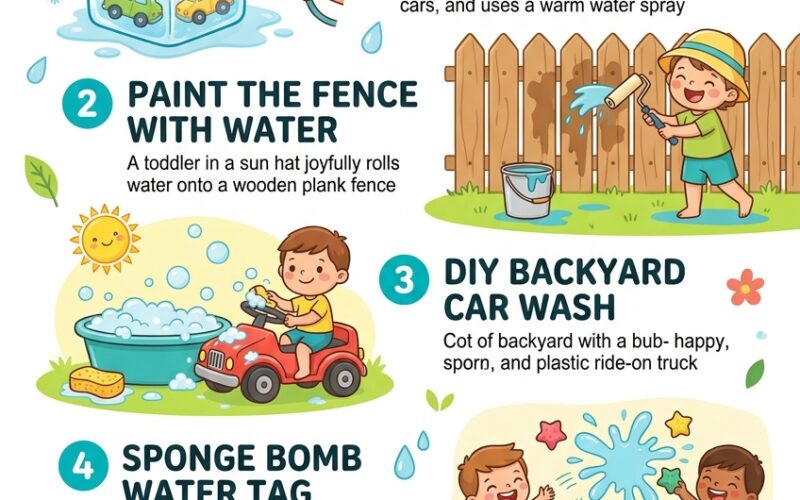
2. Paint the Fence with Water
Sometimes the simplest ideas work best because they eliminate the friction of complicated rules. Water painting gives toddlers full physical freedom without any cleanup stress.
How to Set It Up:
- Fill a small bucket or plastic bowl with plain water.
- Hand your toddler a real, wide paint roller, a large paintbrush, or a clean dish sponge.
- Show them how to dip and “paint” the wooden fence, concrete driveway, brick wall, or outdoor patio furniture.
Why It Works for Short Attention Spans: Toddlers love gross-motor movements that mimic adult chores. Painting a large surface uses their shoulders and core muscles, which helps burn off physical energy. As the sun evaporates the dark water marks, the “paintings” disappear, creating a natural reset that encourages them to start all over again.
3. The DIY Backyard Car Wash
If your child abandons their ride-on toys or toy trucks after two minutes, adding water and soap instantly turns an old toy into a brand-new experience.
How to Set It Up:
- Grab a low plastic storage bin and fill it with warm water and a generous squirt of tear-free bubble bath or baby shampoo.
- Add a few dish sponges, microfiber cloths, and old toothbrushes.
- Line up their balance bikes, ride-on cars, or plastic toy trucks on the grass or patio.
- Set up a second bucket with clean rinse water or hand them a gentle garden hose sprayer.
Why It Works for Short Attention Spans: This activity breaks down into small, quick steps: bubbling, scrubbing, rinsing, and drying. When your child loses interest in scrubbing a truck, they can pivot to making bubble hats, squeezing sponges, or spraying the grass. The freedom to move between sub-tasks keeps them engaged longer overall.
4. Sponge Bomb Water Tag
Traditional water balloons take ten minutes to fill, five seconds to pop, and leave tiny pieces of latex scattered across your lawn that take forever to pick up. Sponge bombs offer all the splash with none of the hassle.
How to Set It Up:
- Cut standard kitchen sponges into long vertical strips.
- Stack 4–5 strips together and tie them tightly in the middle with a rubber band or hair tie to form a starburst shape.
- Fill a large tub or bucket with water.
- Throw the sponge bombs into the water and let your toddler toss them at a target—like a plastic laundry basket, a tree trunk, or an outdoor wall.
Why It Works for Short Attention Spans: Sponge bombs are easy for small hands to grip, soak up maximum water, and deliver instant splash gratification on impact. Because they are soft, reusable, and painless, toddlers can quickly toss, re-soak, and throw again without waiting for an adult to knot a balloon.
5. Frozen Toy Popsicle Hunt
Turn an ordinary backyard walk into an active scavenger hunt by hiding frozen treats around the yard for them to find and rescue.
How to Set It Up:
- Fill a silicone muffin tin or large ice cube tray with water.
- Place one small plastic animal, toy car, or large button into each cup and freeze completely.
- Hide the frozen ice cubes around the yard in easy-to-see spots: on low tree branches, inside flower pots, or on top of patio chairs.
- Give your toddler a small basket or bucket to collect the hidden ice popsicles.
Why It Works for Short Attention Spans: Scavenger hunts harness a toddler’s natural impulse to search, gather, and collect. Because each find is a quick, discrete win, it keeps their motivation high. Once all the ice pops are gathered in their bucket, you can transition straight into a melt-and-rescue activity at the outdoor table.
Quick Tips for Keeping Toddlers Engaged Longer
Even with the best activities, a toddler’s attention will naturally shift. Here are three simple strategies to extend play time without forcing it:
- Rotate the Tools: When your toddler looks ready to walk away, don’t change the activity—change the tool. Swapping a spoon for a turkey baster or a cup for a squirt bottle buys another five to ten minutes of focus.
- Keep Prompts Low-Pressure: Avoid asking them to “finish” a task. Focus on open-ended exploration using action words like splash, pour, scrub, or dump.
- Embrace the Mess: Toddlers lose interest quickly when they feel overly restricted. Setting activities outside on the grass allows them to spill, splash, and explore freely without constantly hearing “be careful.”
Focusing on open-ended, sensory-rich play makes summer days smoother for both you and your toddler. Pick one simple idea today, set it up in under two minutes, and let your child explore at their own rapid pace.
