
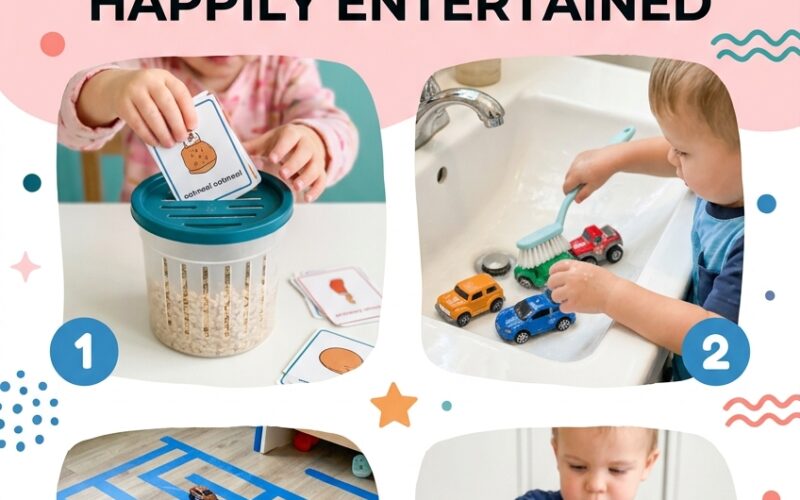
Every parent knows the feeling: you need 20 minutes to cook dinner, answer a work email, or drink a cup of coffee while it’s actually hot, but your toddler is currently scaling the kitchen counters. Before you hand over the tablet or buy another expensive plastic toy, take a breath.
Keeping toddlers occupied doesn’t require elaborate sensory setups or hours of Pinterest prep. In fact, young children are often most fascinated by household objects and simple, open-ended tasks.
Here are 12 low-prep, budget-friendly activities that use everyday household items to keep your toddler engaged, learning, and independent.
The Low-Prep Activity Playbook
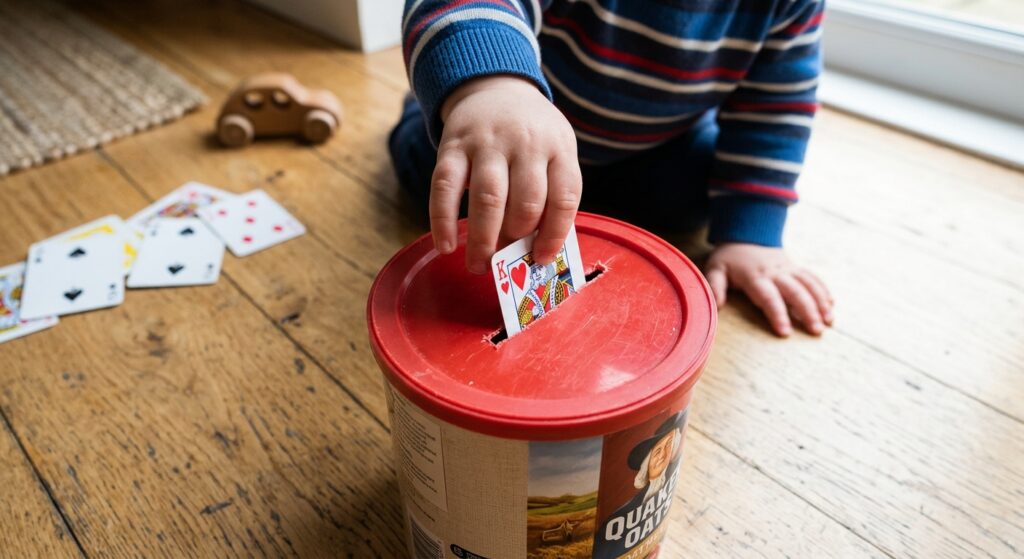
1. The Card Slot Drop
Toddlers are obsessed with “posting” items—dropping objects through small openings and dumping them out again.
- Setup Time: 2 minutes
- What You Need: An empty oatmeal container (or tissue box) and a deck of playing cards.
- How to Do It: Cut a slit in the plastic lid of an oatmeal container, just wide enough for a card. Hand your toddler the stack of playing cards and show them how to drop the cards into the slot. Once filled, they can pull off the lid, dump them out, and start all over.
- Skill Built: Fine motor control and spatial awareness.
2. The Kitchen Sink Toy Wash
If your toddler loves water play, this activity turns a simple chore into an absolute entertainment magnet.
- Setup Time: 3 minutes
- What You Need: A shallow plastic bin or kitchen sink, a drop of dish soap, a scrub brush or sponge, and plastic toy animals or cars.
- How to Do It: Fill the bin with warm, soapy water. Hand your child a small brush or sponge and tell them their toy cars or farm animals need a “bath”. Lay down a towel underneath the bin to catch any stray splashes.
- Skill Built: Sensory processing and practical life skills.
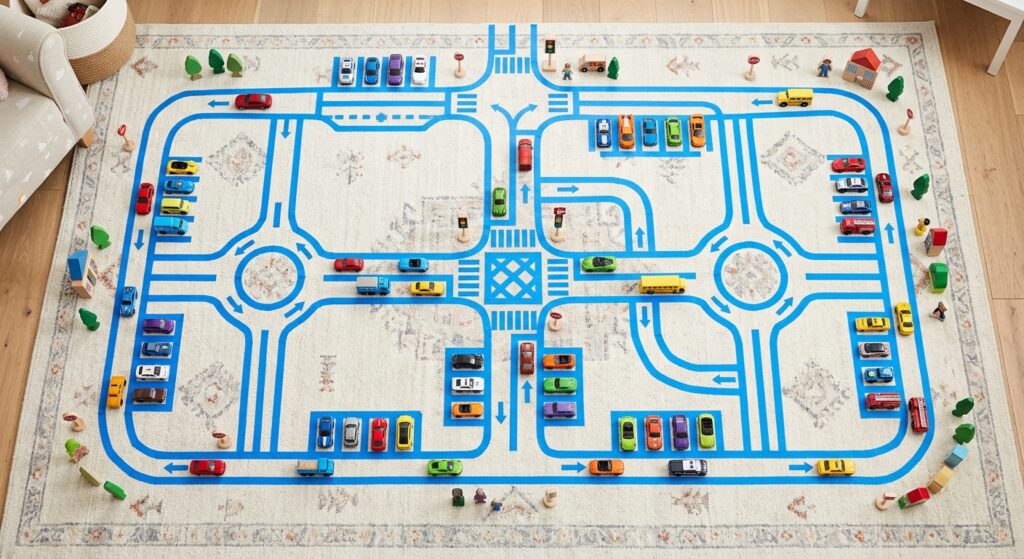
3. Painter’s Tape Roads
Skip the expensive train tracks and turn your living room floor into a custom highway system.
- Setup Time: 5 minutes
- What You Need: A roll of blue painter’s tape and toy cars.
- How to Do It: Stick lines of painter’s tape across your hardwood, tile, or carpet to create roads, intersections, and parking spots. You can even run tape up and over couch cushions to create hills and ramps.
- Skill Built: Imaginative play and gross motor movement.
4. Cardboard Tube Pom-Pom Drop
This classic activity leverages gravity to teach simple cause-and-effect.
- Setup Time: 3 minutes
- What You Need: Empty paper towel or toilet paper tubes, painter’s tape, pom-poms (or cotton balls), and a bowl.
- How to Do It: Tape empty paper towel tubes vertically or at angles onto a wall or door. Place a bowl beneath the bottom opening. Show your toddler how to drop pom-poms into the top and watch them fall through into the bucket.
- Skill Built: Hand-eye coordination and visual tracking.
5. Water “Painting” on the Wall
A zero-mess art project that works indoors or outdoors on sunny days.
- Setup Time: 30 seconds
- What You Need: A small cup of water, a paintbrush, and dark construction paper or outdoor brick/concrete.
- How to Do It: Give your child a cup with a few ounces of water and a thick paintbrush. Let them “paint” brushstrokes on construction paper taped to the wall, or head outside to paint the driveway or house bricks. The water temporarily darkens the surface, giving the illusion of real paint with zero cleanup required.
- Skill Built: Early writing grip and motor coordination.
6. The Colander Pipe Cleaner Rescue
Pushing and pulling objects through small holes is endlessly fascinating to toddlers aged 18–36 months.
- Setup Time: 2 minutes
- What You Need: A metal or plastic kitchen colander and colorful pipe cleaners.
- How to Do It: Flip the colander upside down. Thread pipe cleaners through the holes, bending some inside so they require a little tug to pull out. Show your toddler how to push pipe cleaners into the holes or pull them free.
- Skill Built: Pincer grasp and finger strength.
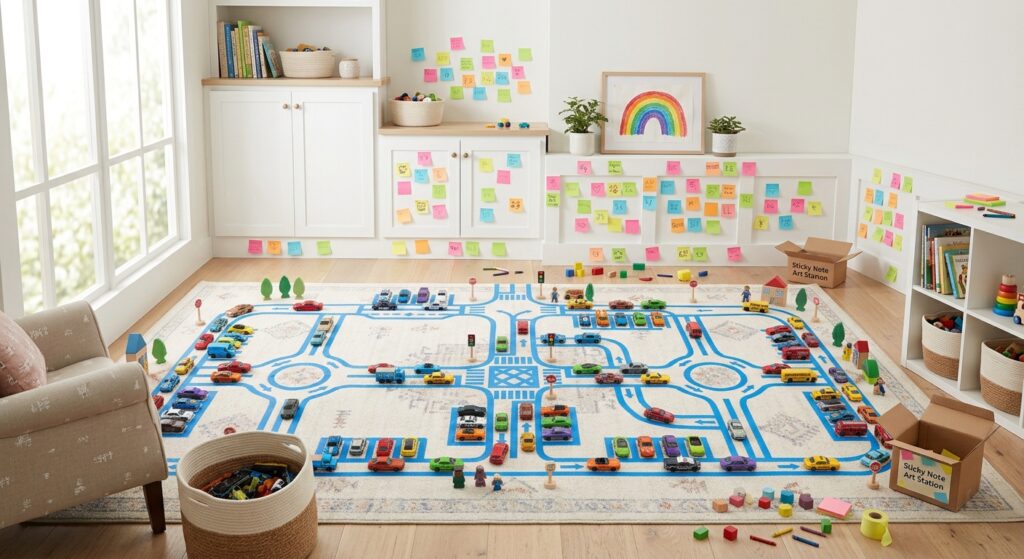
7. The Post-It Note Scavenger Hunt
If your toddler has energy to burn, turn a basic office supply into a movement game.
- Setup Time: 3 minutes
- What You Need: A stack of colorful Post-it notes.
- How to Do It: Stick 10–15 Post-it notes around the room at toddler height—on furniture, doors, walls, and toys. Challenge your toddler to walk around, peel them all off, and bring them back to you one by one (or match them by color).
- Skill Built: Gross motor activity and color recognition.
8. The Whisk & Pom-Pom Rescue
A simple puzzle using items already sitting in your kitchen drawers.
- Setup Time: 1 minute
- What You Need: A wire kitchen whisk and craft pom-poms (or large felt balls).
- How to Do It: Stuff several large pom-poms inside the wire loops of a whisk. Hand it to your child and ask them to “rescue” the pom-poms by pulling them out through the gaps.
- Skill Built: Problem-solving and fine motor dexterity.
9. Sticky Wall Collage
Contact paper allows toddlers to build artwork without glue sticks or messy liquid adhesives.
- Setup Time: 4 minutes
- What You Need: Clear contact paper, painter’s tape, and scraps of paper, buttons, or lightweight yarn.
- How to Do It: Cut a square of contact paper and tape it to a wall or window with the sticky side facing out. Provide a small bowl of paper scraps, tissue paper, or yarn, and let your toddler stick items to the wall to create a collage.
- Skill Built: Tactile sensory exploration and creative planning.
10. The Pillow & Cushion Obstacle Course
When indoor weather keeps you stuck inside, redirect climbing energy into an intentional physical setup.
- Setup Time: 3 minutes
- What You Need: Couch cushions, bed pillows, and throw blankets.
- How to Do It: Line up cushions and pillows across the rug. Call it a “lava course” or “jungle bridge” and encourage your toddler to step, crawl, or balance across without touching the floor.
- Skill Built: Balance, agility, and core strength.
11. Muffin Tin Sorting Game
Sorting objects by shape, size, or color helps build foundational math concepts.
| Element | Description |
| Setup Time | 2 minutes |
| Materials Needed | 6-cup or 12-cup muffin tin, mixed household items (large buttons, wooden blocks, colorful pasta) |
| Activity Instructions | Dump a mix of items into a main bowl next to the muffin tin. Show your toddler how to place all the red items in one cup, blue in another, or wooden items in a third. |
| Developmental Focus | Pattern recognition and categorization. |
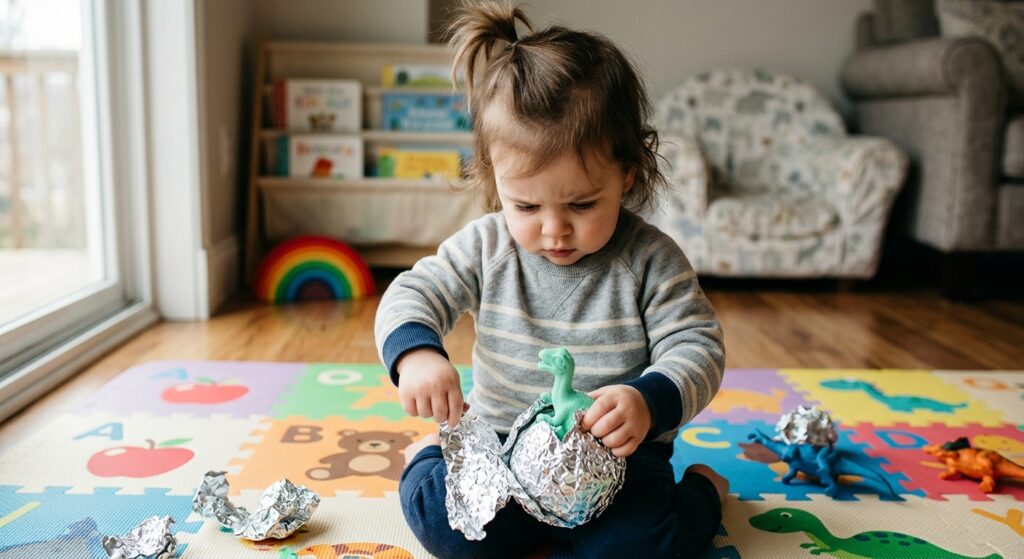
12. Aluminum Foil Treasure Unwrapping
Unwrapping objects triggers a toddler’s natural curiosity about hidden items.
- Setup Time: 4 minutes
- What You Need: Aluminum foil and a few small plastic toys (animals, cars, or blocks).
- How to Do It: Wrap 5–6 small toy figures loosely in sheets of aluminum foil. Hand the foil “packages” to your child and let them peel away the foil to discover what toy is hidden inside.
- Skill Built: Hand strength, bilateral coordination (using both hands together), and curiosity.
3 Rules for Low-Prep Success
- Keep Expectations Realistic: Toddlers typically stay focused on an independent activity for 5–15 minutes. That is completely normal!
- Rotate, Don’t Accumulate: You don’t need dozens of supplies. Rotating 3 or 4 simple materials (like painter’s tape or pom-poms) keeps them feeling fresh.
- Prioritize Open-Ended Play: Activities without a rigid “right or wrong” way to play lower frustration and keep toddlers entertained longer.
Save this post for the next time you need a quick, screen-free activity that gives you a moment of peace while helping your little one learn through play!
