
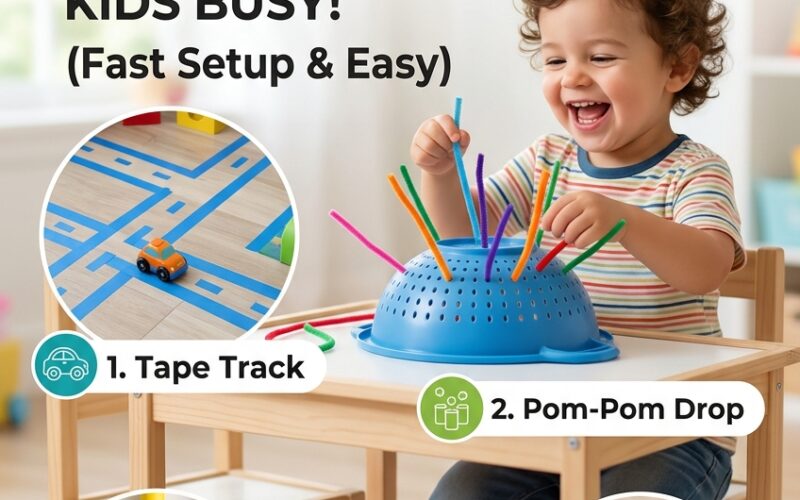
Every parent knows the feeling: you need to finish an important phone call, prep dinner, or just drink a cup of coffee while it’s still hot, but your toddler needs immediate entertainment. Complex craft projects with 20 distinct supplies sound wonderful on paper, but when setup takes longer than actual play, it simply isn’t practical.
The secret to toddler engagement isn’t elaborate planning—it’s novelty, simplicity, and fast setup. These 7-minute toddler activities use items already in your house, take less than 60 seconds to set up, and keep small hands focused so you can catch your breath.
Why 7-Minute Activities Work for Toddlers
Between 18 months and 4 years old, attention spans are naturally short. Young children learn through quick, sensory-rich bursts of play.
- Zero-Prep Setup: Less setup time means zero frustration if your toddler shifts focus quickly.
- Fine & Gross Motor Skill Building: Simple tasks like peeling, dropping, and pouring build finger strength and physical coordination.
- Independent Exploration: Easy boundaries allow toddlers to take charge of their own play without constant adult intervention.
1. Painter’s Tape Road Track
Painter’s tape is arguably the most versatile parenting tool in your house. Laying down a simple tape line transforms your hallway or living room rug into an instant highway system.
- What You Need: Painter’s tape, toy cars or trucks.
- How to Play: Run strips of tape across the floor to form roads, intersections, or parking spots. Challenge your toddler to keep their cars strictly on the blue lines, park by color, or drive between rooms.
- Skill Built: Hand-eye coordination and imaginative play.
2. Wall-Mounted Pom-Pom Drop
Gravity is endlessly fascinating to toddlers. Taping cardboard tubes to a vertical surface turns basic pom-poms into a fast-paced drop game.
- What You Need: Empty paper towel/toilet paper tubes, painter’s tape, craft pom-poms (or cotton balls), and a small bowl.
- How to Play: Tape two or three paper tubes vertically to a wall, door, or hallway mirror at your child’s standing eye level. Place a container underneath to catch the items, and hand your child a bowl of pom-poms to drop through.
- Skill Built: Fine motor control and cause-and-effect tracking.
3. The Kitchen Sink “Wash Station”
Toddlers love mimicry and water play. A shallow wash station keeps children deeply focused because it feels like real work.
- What You Need: A shallow plastic bin or kitchen sink stepstool, warm water, a tiny drop of dish soap, a sponge, and plastic toy animals or dishes.
- How to Play: Set your child up at the sink or on a towel on the kitchen floor with the tub. Task them with giving their plastic toys a “thorough bath” using the sponge.
- Skill Built: Sensory integration and practical life confidence.
. Colander & Pipe Cleaner Hedgehog
If you need a quiet activity while cooking, this pantry staple trick works wonders for quiet-time focus.
Supply Checklist:
[ ] 1 Kitchen Colander (plastic or metal)
[ ] 10-15 Craft Pipe Cleaners (fuzzy sticks)
Skill Built: Pincer grasp strength and visual-motor integration.
How to Play: Flip the colander upside down on a table. Show your toddler how to push the pipe cleaners through the tiny holes. Older toddlers can bend them into loops or pull them out from the inside.
5. Post-It Note Scavenger Hunt
Movement activities are perfect when your toddler has extra energy to burn indoors.
- What You Need: 6–10 colorful Post-it notes.
- How to Play: Stick colorful sticky notes at your child’s eye level around the living room (on doors, chairs, and low tables). Ask your toddler to run around, peel every note off, and bring them back to you one by one.
- Pro Tip: Draw matching simple shapes or colors on the notes to add a quick sorting challenge.
- Skill Built: Gross motor movement and color recognition.
6. The Card Slot Container Drop
Toddlers love the “posting” schema—putting items inside containers and dumping them out again.
- What You Need: A plastic oatmeal tub or shoe box with a lid, playing cards (or craft sticks), and scissors.
- How to Play: Cut a thin slit into the plastic lid of an empty container. Hand your toddler a deck of old playing cards or popsicle sticks and let them slip each item into the slot one by one.
- Skill Built: Spatial awareness and wrist rotation.
7. Ice Cube Rescue Mission
Ice is an incredible sensory material that costs nothing and creates virtually zero mess as it melts.
- What You Need: Muffin tin or plastic tub, ice cubes, warm water in a small cup, and an eye dropper or small spoon.
- How to Play: Place ice cubes (optionally frozen with small plastic toys inside) into a muffin tray or bin. Give your toddler a small spoon or squeeze bottle filled with warm water to melt the ice and “rescue” the objects.
- Skill Built: Temperature exploration, scientific reasoning, and hand endurance.
Quick Comparison of Toddler Activity Types
| Activity | Setup Time | Clean-Up Level | Primary Skill Focus | Best Location |
| Tape Track | 2 mins | Zero (peels right up) | Fine/Gross Motor | Hallway / Living Room |
| Pom-Pom Drop | 1 min | Quick (sweep into bowl) | Fine Motor & Gravity | Door or Wall |
| Kitchen Wash Station | 2 mins | Medium (towel dry) | Sensory & Independence | Kitchen |
| Colander Hedgehog | 30 secs | Zero | Pincer Grasp | High Chair / Table |
| Post-It Hunt | 1 min | Zero | Gross Motor & Energy Burn | Any Open Room |
| Card Slot Drop | 1 min | Quick | Hand-Eye Coordination | Playroom |
| Ice Cube Rescue | 1 min | Low | Sensory & Problem-Solving | Kitchen Counter |
Frequently Asked Questions
What if my toddler gets bored after 2 minutes?
That is completely normal! Toddler play is about rotation. If they lose interest, simply pack the materials out of sight. Bringing the exact same pom-pom tube out three days later will feel brand-new to them.
How do I encourage independent play?
Start the activity with them for 60 seconds. Sit down, demonstrate the action once (“Watch the pom-pom slide down!”), let them try twice, and then slowly step back while offering verbal encouragement.
Are these activities safe for 18-month-olds?
Always tailor items to your child’s age. If your child still mouths toys, swap small pom-poms for large felt balls or cotton pads, and ensure all water play is actively supervised.
Keep Play Simple
Keeping small kids entertained doesn’t require expensive subscription boxes or hours of Pinterest preparation. With a roll of painter’s tape, a colander, or a couple of cardboard tubes, you can transform ordinary household items into quick, engaging activities whenever you need a moment to reset.
