
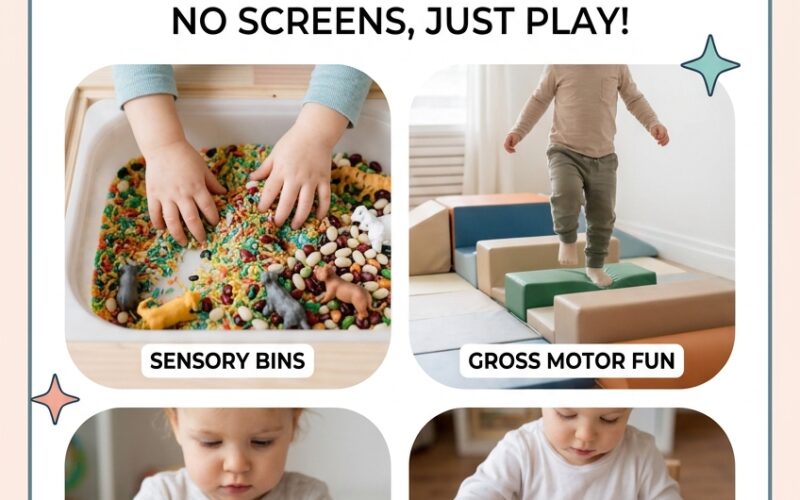
In an increasingly digital landscape, modern parenting often presents a silent dilemma: balancing convenient screen time with the rich, tactile real-world experiences toddlers inherently crave. Between ages one and three, a toddler’s brain generates over one million new neural connections every single second. These vital neural pathways are built not through passive tapping on a glass tablet screen, but through dynamic, hands-on physical engagement with their immediate physical environment.
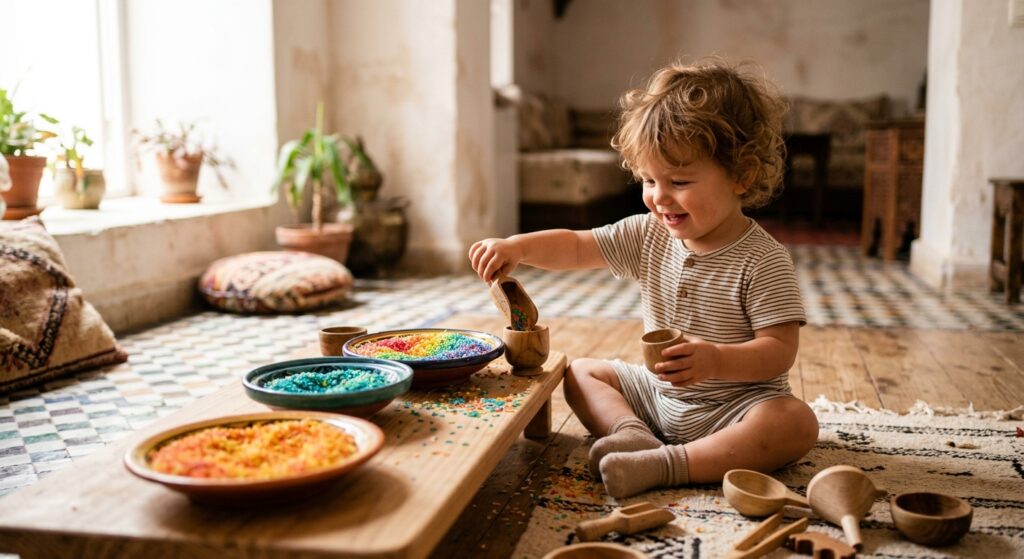
When young children squeeze squishy clay, balance across dynamic stepping stones, or feel the cool splash of water, they are doing far more than just burning off boundless energy. They are actively wiring their brains, building critical motor pathways, and developing emotional self-regulation skills. Transitioning to a screen-free routine does not require expensive store-bought toys or extravagant setups. With simple household materials, you can craft captivating sensory and motor activities that keep toddlers deeply engaged while fostering foundational developmental milestones.
Why Screen-Free Sensory & Motor Play Matters
Sensory play encompasses any structured or open-ended activity that stimulates a child’s fundamental senses: touch, smell, sight, sound, and movement. Motor skill development is traditionally divided into two core categories: gross motor skills (large muscle movements like running, jumping, and balancing) and fine motor skills (smaller, intricate movements involving hand-eye coordination and finger dexterity).
- Cognitive Growth: Tactile exploration strengthens problem-solving, spatial awareness, and cause-and-effect reasoning.
- Language Building: Describing textures (rough, squishy, chilly, smooth) naturally expands rich expressive vocabulary.
- Emotional Regulation: Sensory play—especially water and dough play—serves as an exceptionally calming mechanism for overstimulated toddlers.
- Physical Mastery: Targeted motor activities prepare young hands for future essential tasks, including writing, buttoning, and using utensils independently.
By shifting focus from passive digital consumption to interactive physical play, parents create rich opportunities for self-directed learning, physical strength, and resilience.
Part 1: Dynamic Sensory Activities to Spark Wonder
Sensory bins and tactile experiences offer limitless opportunities for open-ended play. Here are three simple, mess-managed setups to spark curiosity at home.
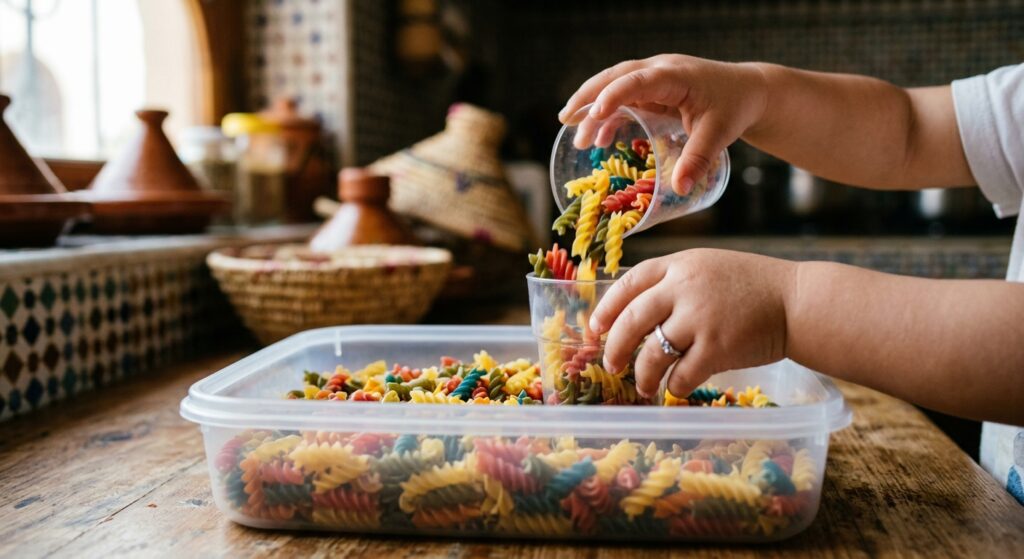
1. The Ocean Rescue Water Bin
Water play remains an unrivaled favorite among toddlers, delivering immediate sensory feedback and natural soothing properties.
- Setup: Fill a large shallow plastic tub with two inches of lukewarm water. Add a drop of blue natural food coloring, a few plastic sea animals, and household kitchen utensils like a whisk, ladle, slotted spoon, and sponges.
- Developmental Benefit: Scooping, pouring, and squeezing sponges strengthen hand muscles and refine bilateral coordination (using both hands together purposefully).
- Parent Tip: Place a large bath towel beneath the bin to contain accidental splashes and teach easy cleanup habits early.
2. Rainbow Tactile Rice Search
Dry rice provides a soothing, auditory, and deeply satisfying tactile base for fine-motor exploration.
- Setup: Fill a plastic container with dry uncooked rice (dyed with vinegar and food coloring for vibrant colors if desired). Hide small solid objects, such as large wooden buttons or chunky plastic puzzle pieces, beneath the surface. Provide an egg carton or muffin tin for sorting.
- Developmental Benefit: Enhances the pincer grasp (thumb and index finger grip) and visual discrimination as toddlers search for and sort hidden treasures.
3. Safe “Mess-Free” Paint Sensation
Enjoy the rich visual and sensory perks of painting without the overwhelming post-activity cleanup.
- Setup: Squirt several generous dollops of non-toxic washable paint inside a sturdy gallon-sized Ziploc bag. Tape the bag securely to a bright window or low wooden table using painter’s tape.
- Developmental Benefit: Toddlers can squish, swirl, and trace patterns with their fingers, observing color blending firsthand while receiving rich tactile feedback without messy hands.
Part 2: Energizing Gross Motor Activities for Active Body Play
Toddlers possess an innate drive to test their physical limits, balance, and core strength. Channel that boundless indoor energy with these purpose-built physical challenges.
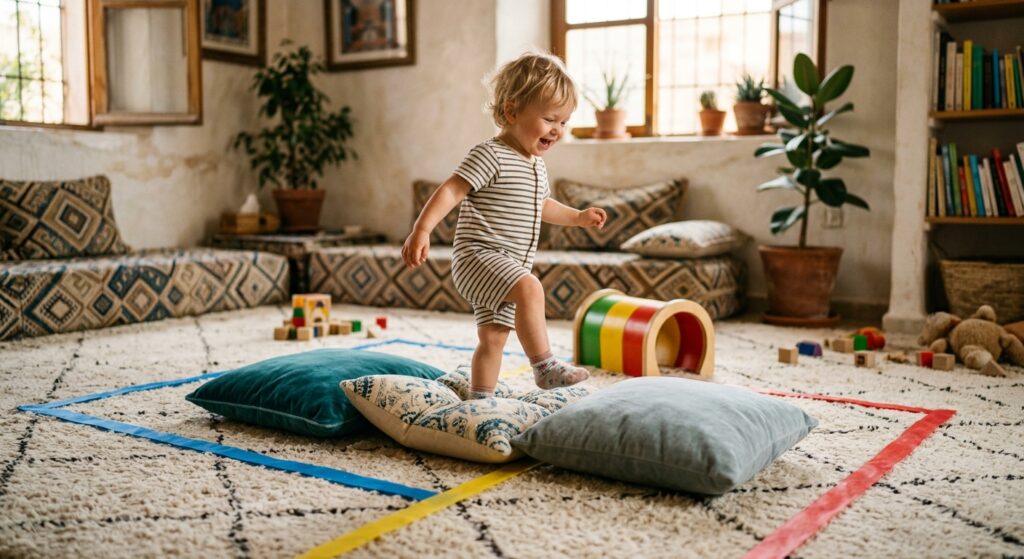
4. The Living Room Obstacle Course
Transform ordinary living room furniture into an adventurous, skill-building mobility course.
- Setup: Line up couch cushions to walk across, set down a low cardboard box to step over, lay painter’s tape lines on the carpet to balance on, and place a tunnel or blanket fort at the end to crawl through.
- Developmental Benefit: Develops spatial awareness, balance, depth perception, and core physical strength.
5. Painter’s Tape Balance Line & Hop
Simple painter’s tape can unlock dozens of creative physical movement games right on your living room floor.
- Setup: Create straight, zigzag, and wavy lines on the floor using low-tack painter’s tape. Place tape “X” markers at varying intervals along the path.
- Developmental Benefit: Promotes motor planning, dynamic equilibrium, and precise foot placement as children attempt to stay on the line or jump onto the targets.
Part 3: Precision Fine Motor Activities for Small Hands
Building strong fingers, wrists, and hand-eye coordination lays the necessary physical groundwork for writing, drawing, and self-care independence later in childhood.
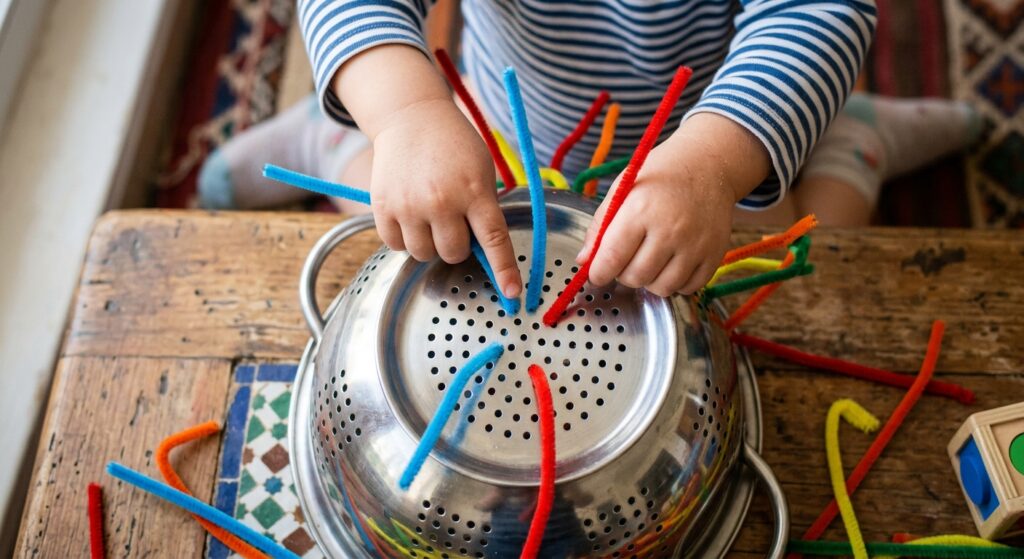
6. Colander & Pipe Cleaner Hedgehog
A surprisingly engaging activity that requires high focus and hand control.
- Setup: Turn an ordinary stainless steel or plastic kitchen colander upside down. Hand your toddler a handful of colorful chenille pipe cleaners and demonstrate pushing them through the small drain holes.
- Developmental Benefit: Builds deliberate hand-eye coordination, fine motor accuracy, and sustained concentration skills.
7. Post-it Note Search & Peel
Peeling stickers or sticky notes builds essential thumb and finger strength.
- Setup: Stick bright sticky notes onto walls, doors, or furniture at varying heights (requiring stretching up or squatting low). Ask your child to hunt down specific colors and peel them off to place in a basket.
- Developmental Benefit: Strengthens finger flexor muscles while integrating upper-body and lower-body movement.
💡 Pro-Tip for Parents: Embrace the Process, Not the Outcome
Toddlers are naturally process-oriented explorers. They care little about whether the obstacle course is finished correctly or if the rice stays perfectly in the tub. Resist the urge to fix or correct their method of play. As long as the setup is safe, allow your toddler to guide their own discovery process!
Final Thoughts: Embracing Joyful Real-World Discovery
Fostering screen-free engagement doesn’t mean you need to curate an elaborate, Pinterest-perfect activity schedule every single day. Start small—introduce just one structured sensory or motor activity each day, or simply offer raw materials and step back to observe how your child interacts with them.
By replacing screen time with hands-on, multi-sensory experiences, you are giving your toddler the greatest gift possible: the opportunity to explore, experiment, fall down, get back up, and touch the physical world around them. The neural foundations, physical strength, and joyful curiosity built during these early toddler years will pay dividends for a lifetime.
