
If you are currently parenting a toddler, you know that their energy levels operate on two speeds: fast-forward and full-speed sprint. Keeping a young child engaged can feel like a full-time job in itself, especially when you feel pressured to create elaborate sensory bins or buy the latest hyper-specific educational toys.
Here is the secret that early childhood educators know and parent influencers often forget: toddlers do not need complicated setups to thrive.
To a two-year-old, the world is brand new. A simple plastic bowl, a trickle of tap water, or a pile of fallen leaves holds just as much magic—and educational value—as a pricey activity kit. The key to engaging tiny hands lies in channeling their natural curiosity and desire for independence into simple, everyday play.
Here are low-prep, budget-friendly activity ideas that turn ordinary household routines into engaging learning opportunities for your big-thinking toddler.
1. Kitchen Helper Station: The Power of Pouring and Sorting
Toddlers love imitating adults. Instead of trying to keep your child away from the kitchen while you prepare meals or clean up, invite them in with low-risk tasks that build fine motor skills and practical life confidence.
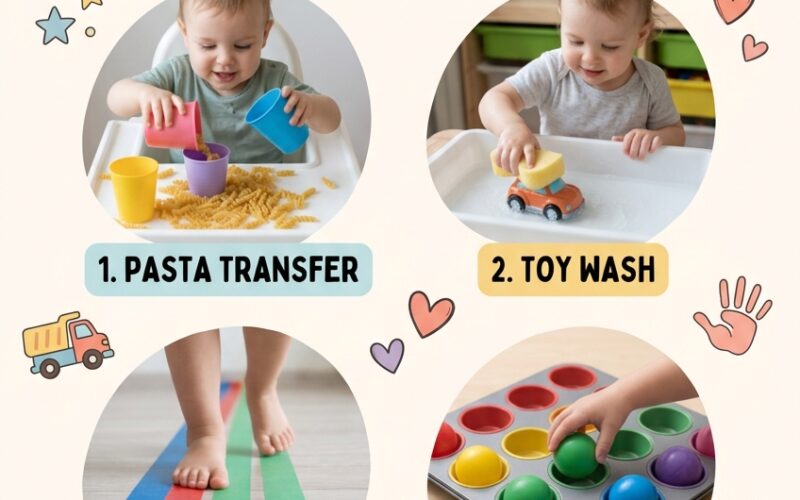
The Dried Pasta Transfer
Give your toddler two plastic bowls and a large wooden spoon or plastic scoop. Fill one bowl with large dried pasta shapes (like rigatoni or penne).
- The Goal: Transfer the pasta from one bowl to another using the scoop.
- Why It Works: Scooping and pouring practice wrist control, hand-eye coordination, and bilateral coordination (using both hands together).
- Variation: Add a pair of chunky plastic kitchen tongs to turn it into a grip-strength challenge.
Water Washing Station
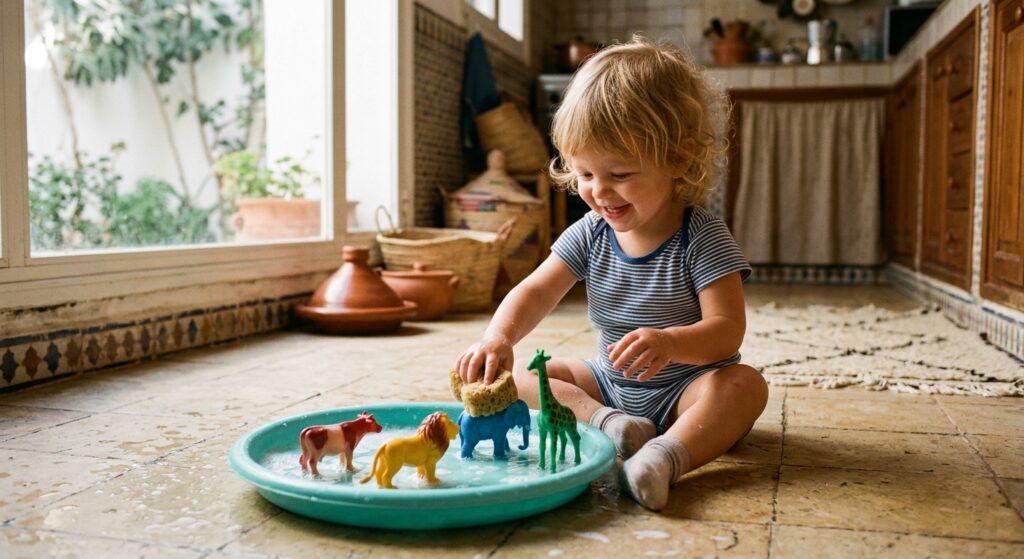
Place a towel on the kitchen floor, set down a shallow baking dish with an inch of warm water, and drop in a few plastic toys along with a small sponge or washcloth.
- The Goal: Give the toys a “bath.”
- Why It Works: Water play is inherently calming. Squeezing a sponge builds intrinsic hand strength—the exact same muscle control required for holding pencils and using scissors later in life.
2. Sensory Exploration with Standard Pantry Staples
Sensory play does not require rainbow-dyed rice or elaborate theme setups. You can create rich tactile experiences using items already sitting in your kitchen cupboards.
+-----------------------------------------------------------------------+
|                       PANTRY SENSORY MATCH-UP                         |
+------------------+-----------------------------+----------------------+
| Ingredient       | Sensory Experience          | Skill Developed      |
+------------------+-----------------------------+----------------------+
| Oatmeal (Dry)    | Scoop, pour, crunch         | Fine motor grip      |
| Flour + Oil      | Moldable "cloud dough"      | Tactile processing   |
| Ice Cubes        | Cold, slippery, melting     | Cause & effect       |
| Gelatin (Cooked) | Squishy, cold, pokeable     | Sensory tolerance    |
+------------------+-----------------------------+----------------------+
Oatmeal Construction Zone
Fill a shallow plastic container with rolled oats and throw in a few small toy trucks, measuring cups, and spoons.
Unlike kinetic sand or play dough, dry oats are easy to vacuum up if spilled, completely non-toxic if sampled, and provide a satisfying texture for scooping, dumping, and burying objects.
3. Movement and Gross Motor Games for Indoors
On rainy days when energy is high and outdoor trips aren’t an option, physical outlets are crucial to preventing meltdowns (for both of you).
The Painter’s Tape Balance Beam
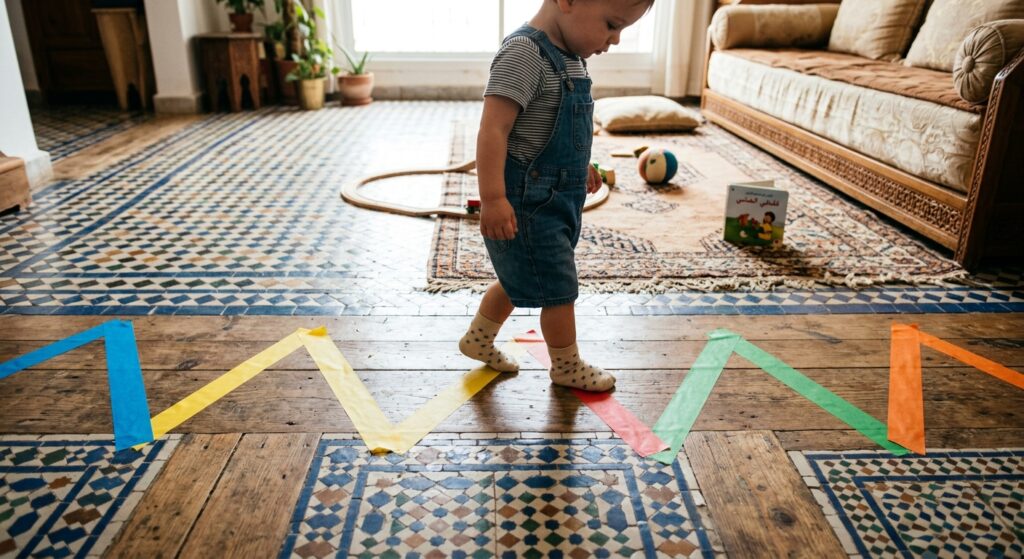
Painter’s tape is the ultimate tool for toddler parents. It sticks to hardwood, tile, and carpet without leaving residue, and it can transform a living room floor in seconds.
- Line Walking: Stick a long straight line of tape on the floor. Challenge your toddler to walk along it like a tightrope walker.
- Shape Targets: Tap out simple shapes (triangles, squares, circles) and ask them to “hop like a frog into the square” or “stomp like a dinosaur into the circle.”
- Why It Works: These activities build balance, spatial awareness, and receptive language skills without taking up any permanent space.
4. Simple Literacy and Sorting Play
You don’t need flashcards to teach early literacy and math concepts. Categorization and pattern recognition are the true building blocks of early cognition.
Color Rescue Mission
Grab a muffin tin and gather a collection of small, colorful items around the house—red blocks, blue socks, green plastic balls, yellow coasters.
Place a piece of colored construction paper at the bottom of each muffin cup matching your gathered items. Have your toddler sort the items into their corresponding color cups.
[ Red Cup ]   --->  Red Lego, Red Sock, Red Ball
[ Blue Cup ]  --->  Blue Car, Blue Marker, Blue Crayon
[ Yellow Cup] --->  Yellow Duck, Yellow Spoon, Yellow Cloth
Sticky Wall Art
Take a sheet of clear contact paper (shelf liner) and tape it to a wall or low window with the sticky side facing out. Give your toddler scraps of tissue paper, yarn, ribbons, or dried leaves.
Because the surface is already sticky, they can press items directly onto the wall without needing glue sticks or messy tape. It allows them to create a collage independently while working on a vertical surface, which strengthens shoulder and wrist stability.
5. Embracing the Magic of Heavy Work
Have you ever noticed your toddler trying to push a heavy laundry basket or drag a chair across the room? In occupational therapy, this is known as “heavy work.”
Heavy work activities stimulate the proprioceptive system—the sensors in our muscles and joints that inform us of our body’s position in space. Pushing, pulling, and carrying weighted objects helps regulate a toddler’s nervous system, promoting focus and calm.
Toddler Work Ideas:
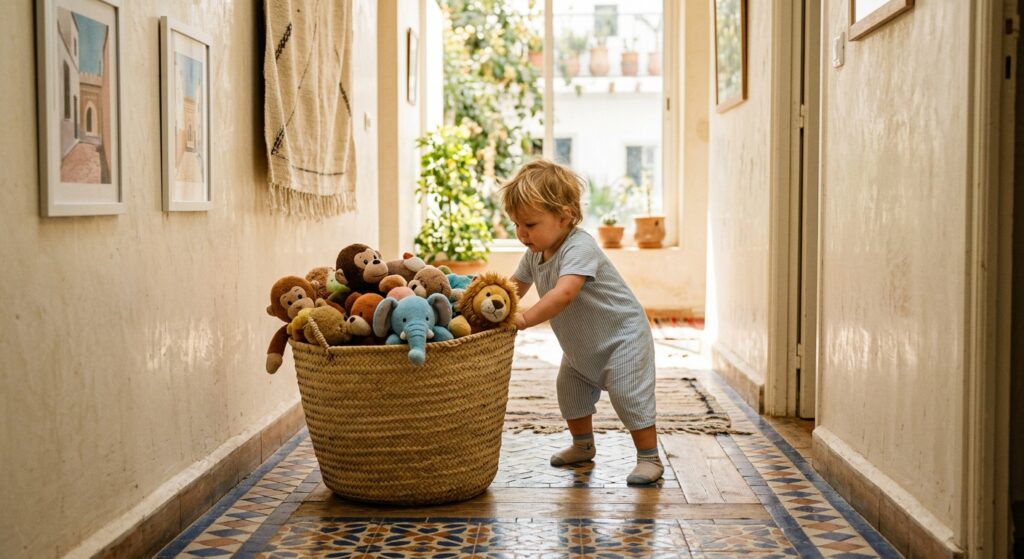
- The Laundry Transport: Fill a laundry basket with towels or stuffed animals and let them push it down the hallway.
- Book Delivery: Ask them to carry two heavy picture books across the room to place on the shelf.
- Watering Can Duty: Give them a small, partially filled watering can to carry around the garden or living room to water plants.
Focus on Connection, Not Perfection
When setting up activities for toddlers, keep your expectations grounded:
- Short Attention Spans: A toddler might engage with an activity for 5 minutes or 20 minutes. Both are completely normal.
- Process Over Product: The goal is the exploration itself, not a picture-perfect final result.
- Step Back: Resist the urge to show them the “correct” way to play. If they start stacking the sorting cups instead of sorting by color, let them lead.
By shifting our focus away from expensive toys and complex Pinterest projects, we make space for genuine learning. With a few household staples, a roll of tape, and a little imagination, your toddler’s tiny hands can turn everyday moments into big ideas.
