
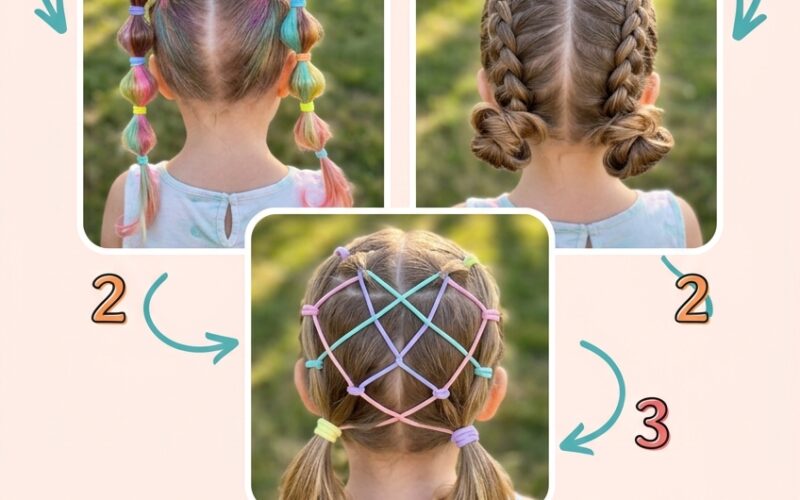
Between playground sprints, muddy backyard adventures, and energetic dance sessions in the living room, keeping a toddler’s hair neat can feel like a full-time job. Active toddler girls need hairstyles that match their non-stop energy: styles that keep hair securely out of their eyes, protect delicate strands from tangles, and hold up through hours of movement—all while looking completely adorable.
Toddler hair is uniquely fine, fragile, and prone to breakage. Traditional styles that rely on tight pulling or heavy products can cause scalp irritation, pain, or traction alopecia. The secret lies in balancing high functionality with soft, tension-free styling techniques.
Why Choose Protective Styles for Toddlers?
Unlike adult protective styling, which often stays in place for weeks, toddler protective styles prioritize everyday durability, scalp comfort, and hair health.
- Prevents Friction Tangles: Active play—especially rolling on play mats or wearing bike helmets—causes severe matting at the nape of the neck. Securing hair prevents these painful tangling knots.
- Reduces Touch-Ups: A good protective style lasts all day through preschool, naptime, and playdates without needing constant re-brushing.
- Encourages Healthy Growth: Protecting fine hair ends from excessive friction and physical wear helps maintain moisture and retain length naturally.
- Keeps Focus on Play: Hair falling into a toddler’s face during sensory play or running can be frustrating. Keeping it secured helps her focus on exploring her world.

5 Durable & Cute Hairstyles for Toddlers on the Go
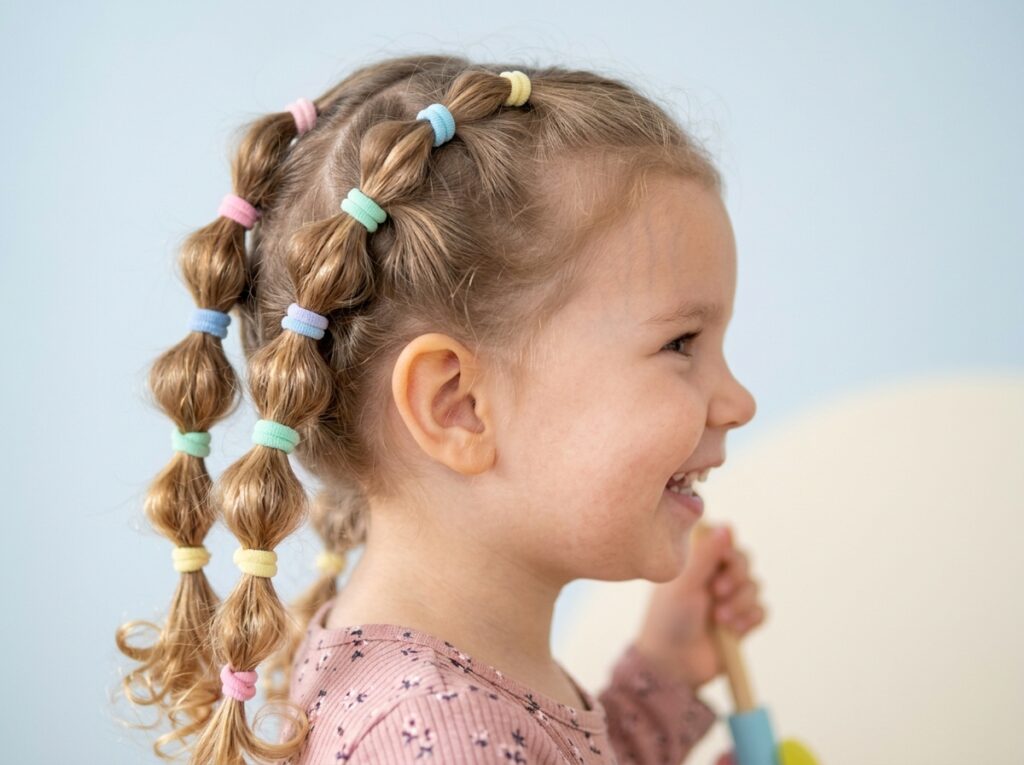
1. Bubble Pigtails
Bubble pigtails give you all the charm of classic pigtails with twice the staying power. Because the hair is secured at multiple points down the pony, short layers and wisps cannot easily work themselves loose.
- Best For: Fine-to-medium hair, medium length, active outdoor play.
- How to Style: Part the hair down the center into two sections. Secure each side into a standard high or mid pigtail using a soft, snag-free elastic. Move down about two inches, add another elastic, and gently tug the hair outward between the bands to create a rounded “bubble.” Repeat down the length of the ponytail.
- Pro Tip: Use colorful fabric elastics or soft silicone bands to make the style pop without pulling on individual strands.
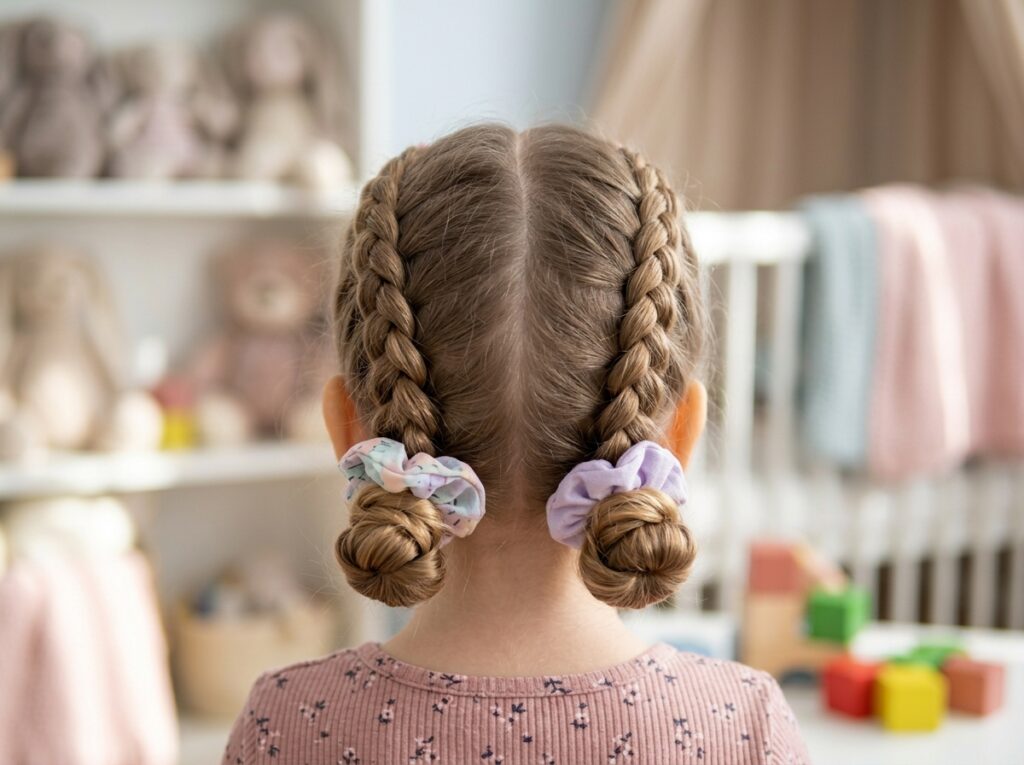
2. Double Dutch Braids into Low Buns (“Space Buns”)
Dutch braids (where sections cross under rather than over) sit on top of the hair, making them extra sturdy against playground friction. Ending the braids in low mini buns keeps hair off the neck on warm days.
- Best For: Medium-to-thick hair, shoulder-length or longer, daycare days.
- How to Style: Divide hair down the middle into two equal halves. Dutch braid each side starting from the hairline near the forehead, moving backward toward the nape of the neck. Once you reach the base of the head, wrap the remaining ponytail into a small, neat donut bun and secure with an elastic or soft scrunchie.
- Pro Tip: Keep braid tension gentle near the hairline to protect sensitive toddler baby hairs.
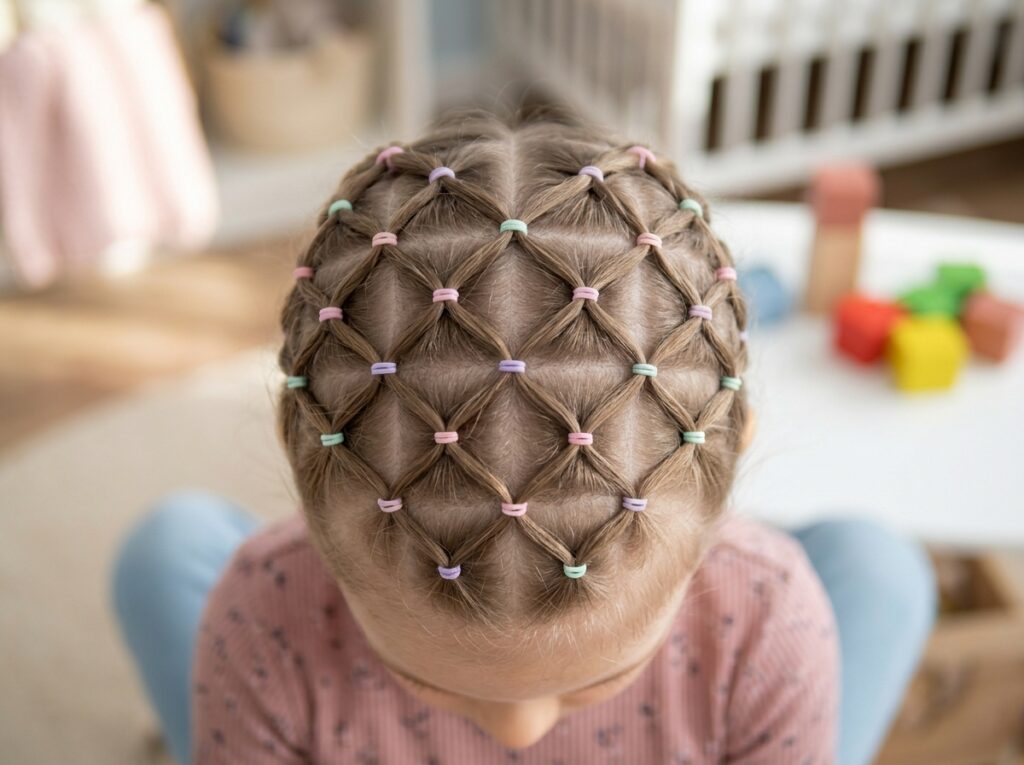
3. The “Criss-Cross” Rubber Band Grid
If your toddler has shorter hair in the front that constantly slips out of braids or ponytails, a front criss-cross sectioning technique keeps fine front strands perfectly anchored.
- Best For: Short-to-medium hair, growing-out bangs, high-energy toddlers.
- How to Style: Divide the front section of hair (from ear to ear, across the top of the crown) into four small equal squares. Secure each square with a soft elastic. Take the left two mini-ponytails, cross them diagonally, and join them into the opposite back ponytails or combine them into a single high ponytail at the crown.
- Pro Tip: Dampen the hair slightly with water or a child-safe leave-in conditioner spray before sectioning to smooth flyaways cleanly.
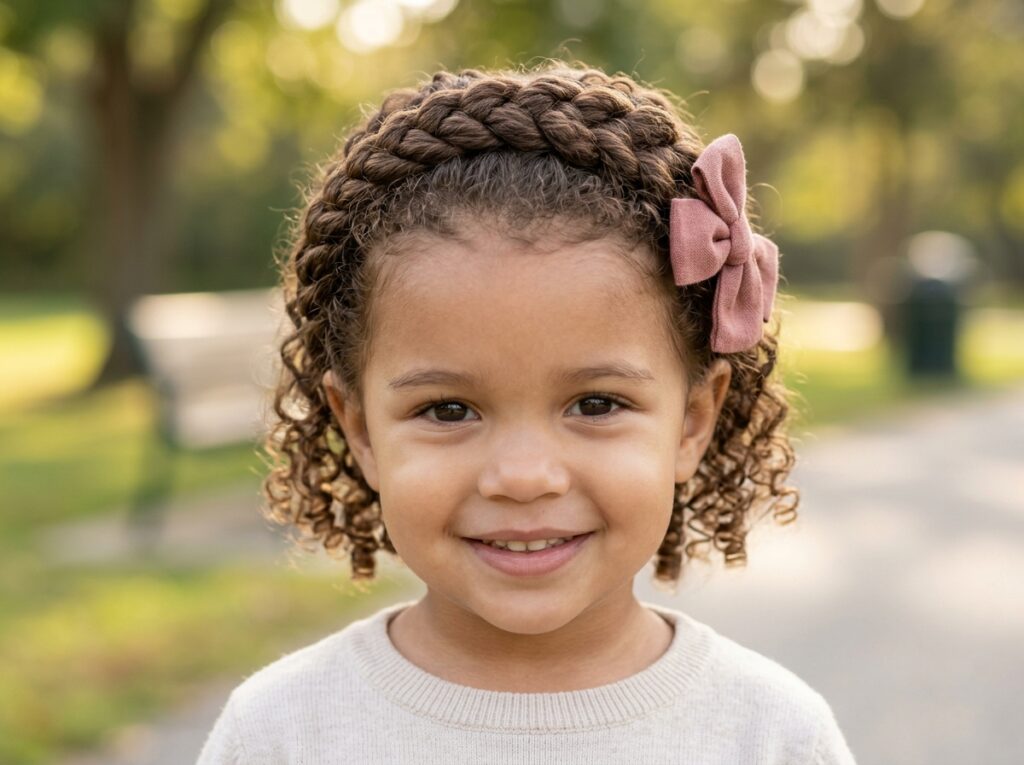
4. Twisted Crown Halo
Twists are significantly faster to execute than traditional three-strand braids—a major advantage when styling an active toddler who cannot sit still for long periods.
- Best For: Curly, coily, or textured hair patterns, short-to-medium lengths.
- How to Style: Starting near a side part, take two small sections of hair along the hairline. Flat-twist them together toward the back of the head, incorporating small bits of additional hair into each twist as you move along the crown (similar to a French braid motion). Secure the ends together at the back with a soft bow or clip.
- Pro Tip: Apply a light, child-safe curl cream or shea butter cream to your fingertips before twisting to seal in moisture and reduce frizz.
5. Multi-Section High Ponytail (The “Train Track” Pony)
Standard single ponytails often sag or fall out within an hour on active toddlers. Dividing the ponytail into three connected tiers distributes tension evenly across the scalp and locks short layers into place.
- Best For: All hair types, shoulder-length hair.
- How to Style: Gather the top section of hair (from temples up) into a small ponytail at the crown. Gather a second section at the middle of the head, combining it with the tail of the first section, and secure. Gather the remaining bottom section at the nape, adding the previous tail, to form one unified, super-secure ponytail.
- Pro Tip: This style is ideal for sports activities or days involving playground climbing structures.

Essential Rules for Safe Toddler Styling
Even the most protective hairstyle can cause damage if applied incorrectly. Keep these foundational hair care rules in mind:
- Avoid Excessive Tension: Never pull hair so tight that the skin around the forehead or temples looks stretched. If your toddler complains or tries to pull the style out immediately, it is too tight.
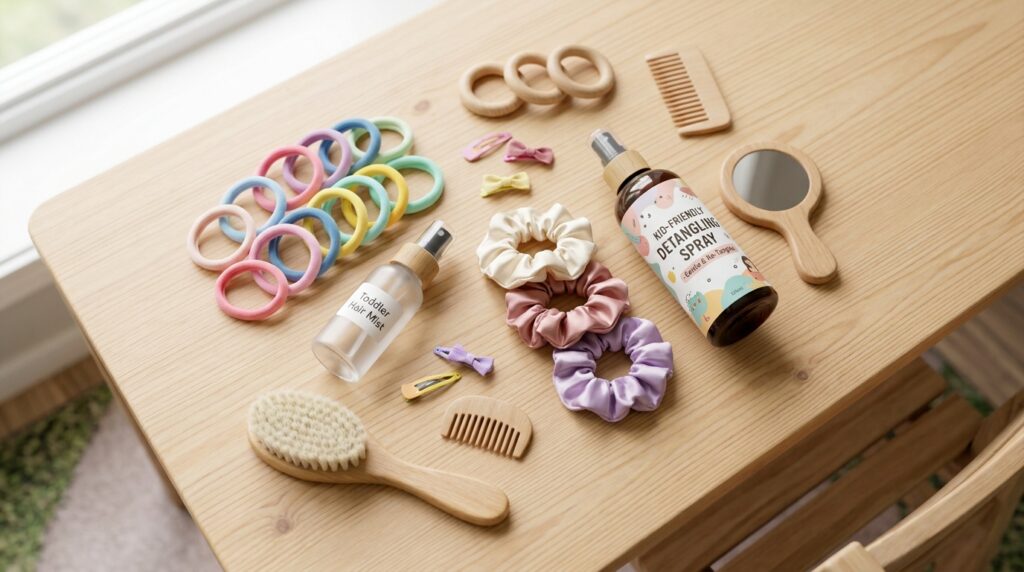
- Ditch Rough Accessories: Avoid bare rubber bands or metal-clasped elastics, which slice through delicate toddler hair shafts. Choose seamless cloth bands, mini satin scrunchies, or soft silicone bands designed specifically for children.
- Moisturize First: Never braid or style dry hair. Mist the hair lightly with water or a kid-friendly detangling spray before styling to ensure flexibility and reduce breakage.
- Remove Carefully: Do not yank or tear elastics out at bedtime. Use a safety seam ripper or specialized elastic cutter to gently cut mini elastics away without snapping hair strands.
Finding a Routine That Works
Styling an active toddler’s hair doesn’t need to involve a daily struggle. Keep a basket of colorful, child-friendly accessories nearby, play her favorite songs or audiobooks during styling time, and prioritize comfort over absolute perfection. With these gentle, durable styles, your little girl can tumble, climb, and explore all day long with total freedom—and look adorable doing it.
