
Let’s be honest: as parents or caregivers, we’ve all been there. It is 3:00 PM, the witching hour is looming large, your toddler is currently trying to scale the living room bookshelf, and you are desperately looking for a way to buy twenty minutes of peace. You remember seeing those gorgeous, intricately styled sensory bins online—the ones filled with custom-dyed rainbow rice, specialized mini-trowels, and themed silicone molds that look like a Pinterest board threw up. They look amazing, but let’s face it: between soaking, drying, dyeing, and hunting down specialty items, preparing them feels like a major home renovation project.
Here is the absolute best-kept secret of early childhood development: kids do not care about rainbow-dyed rice. To a curious toddler or preschooler, plain old dry spaghetti, a handful of dried lentils, or a scoop of flour is pure, unadulterated magic. Sensory play is vital for building neural pathways, improving fine motor skills, and calming an overactive nervous system, but it does not require a trip to the craft store.
The secret lies right in your kitchen. With zero prep time and items you already have in your pantry, you can set up a captivating sensory experience in less than 120 seconds. Grab a baking dish, a plastic storage tub, or even a cake pan, and let’s dive into these genius, lightning-fast sensory bin ideas!
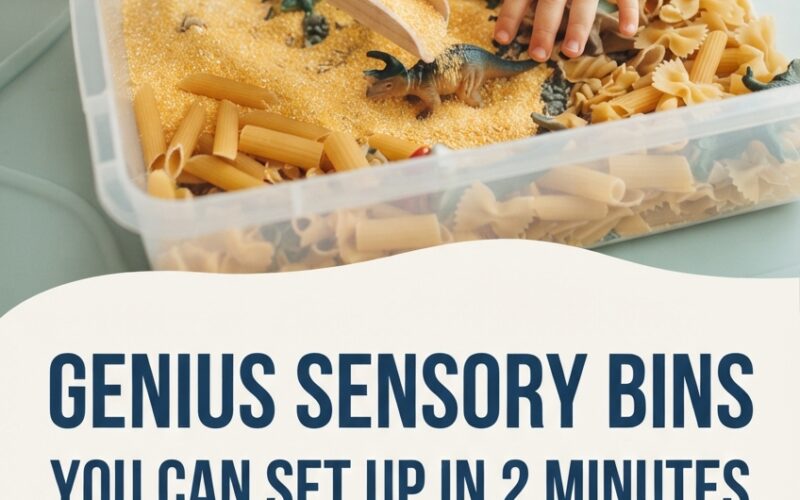
1. The Pasta Construction Zone
- Supplies Needed: 1 box of dry rigatoni, penne, or bow-tie pasta; a few standard kitchen tongs or a large spoon; an empty cardboard box or plastic container.
- Why It Works: Dry pasta has a wonderful, clinking sound when dropped and offers a unique geometric texture. Dump a box of rigatoni into a bin and hand your child a pair of kitchen tongs. Watching them try to grasp the slippery tubes builds incredible fine motor control and hand strength.
- The 2-Minute Setup: Empty the box into a shallow tray, drop in a silicone muffin tin for sorting, and you are done. Your child can practice sorting by shape, feeding “monsters” through pasta tubes, or building towers.
2. The Flour Kitchen & Dino Dig
- Supplies Needed: 2 cups of all-purpose flour or cornstarch; a few plastic toy dinosaurs, animals, or small cars; a tablespoon or small sieve.
- Why It Works: Powdered textures provide incredible tactile feedback. Flour mimics soft desert sand or volcanic ash, making it an epic landscape for dinosaur excavations. Pro-tip: place an old bedsheet or tablecloth on the floor underneath the bin for effortless cleanup.
- The 2-Minute Setup: Pour flour into a rimmed baking sheet and bury a few small toys just beneath the surface. Hand your child a spoon and watch them carefully brush away the “dirt” to reveal their hidden treasures.
3. The Golden Cornmeal Beach
- Supplies Needed: 3 cups of dry cornmeal or polenta; a small plastic cup, funnel, or measuring spoons; a few clean paintbrushes.
- Why It Works: Cornmeal is arguably the ultimate sensory bin filler. It feels remarkably like fine coastal sand, smells faintly sweet, and—best of all—it brushes right off skin and clothes without sticking like wet mud or flour. It’s a sensory dream come true for both kids and neat-freak parents.
- The 2-Minute Setup: Dump the cornmeal into a wide, low storage container and toss in a funnel and cups for pouring. Kids can practice pouring, scooping, and drawing secret letters or shapes directly into the golden grains with their fingers.
4. The Spiced Oat Meadow
- Supplies Needed: 2 cups of rolled oats; 1 tablespoon of cinnamon or pumpkin pie spice; plastic farm animals or toy trees.
- Why It Works: Engaging multiple senses simultaneously supercharges cognitive development. By adding a dash of cinnamon to plain oats, you introduce an aromatic dimension that instantly stimulates the olfactory senses, turning a simple tactile bin into an immersive sensory experience.
- The 2-Minute Setup: Mix oats and cinnamon in a bowl, transfer to a tray, and add a few plastic cows or horses. Children love burying the animals in “hay” or creating little roads and valleys through the oats.
Pro-Parent Safety & Cleanup Hack: Always supervise children during sensory play, especially with smaller items like beans or pasta. To make cleanup completely stress-free, set your sensory bin up inside a large plastic storage tote or directly on a silicone baking mat. When playtime is over, dry grains like cornmeal or oats can easily be funneled back into a ziplock bag and reused for weeks!
Why Kitchen Sensory Bins Are a Game Changer
You don’t need expensive commercial toys to foster deep, engaged learning. When children interact with everyday household items, they engage in open-ended play. There is no right or wrong way to play with a box of dry penne or a tray of cornmeal. This freedom builds crucial problem-solving skills, boosts creativity, and promotes independent play.
Even better, these activities act as natural nervous system regulators. If your child has had an overstimulating day at school or daycare, twenty minutes of quietly running their hands through cool cornmeal or sifting through soft flour can work wonders for emotional decompression.
Final Thoughts
The next time you find yourself staring down a rainy afternoon or trying to buy a few minutes to cook dinner in peace, skip the elaborate Pinterest tutorials. Open your pantry, look for whatever dry goods you have in surplus, and throw together a quick kitchen sensory bin. Your toddler will be thoroughly entertained, their developing brain will thank you, and you didn’t have to spend a dime or waste a single minute dyeing rice.
What is your go-to pantry item for quick kid entertainment? Let us know in the comments below, and happy playing!
