
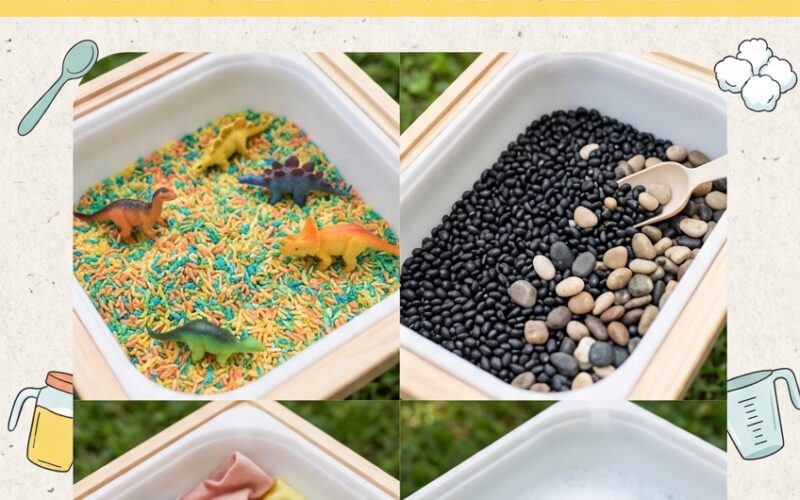
Sensory play is standard practice in early childhood development, promoting fine motor skills, language growth, cognitive problem-solving, and emotional regulation. However, commercial sensory kits often come with inflated price tags.
You do not need to spend money on specialty toys to set up high-value sensory play. Your kitchen pantries, recycling bins, and linen closets are full of tactile materials ready for immediate use.
Here are 15 easy, budget-friendly sensory bin ideas using cheap household items you already own.
Dry Pantry Staples
Dry food items make exceptional base fillers. They are inexpensive, reusable, and offer distinct tactile feedback.
1. Rainbow Rice Dig
- Base: Uncooked white rice.
- Tools: Measuring cups, spoons, dynamic scoops, small plastic bowls.
- How It Works: Pour a bag of dry rice into your container. For added visual stimulation, dye the rice in batch lots using food coloring and a splash of vinegar, allowing it to dry overnight. Children love pouring, measuring, and running their hands through the smooth grain textures.
2. Dried Bean Treasure Hunt
- Base: Mixed dried beans (black beans, pinto beans, kidney beans, chickpea varieties).
- Tools: Tongs, ice cube trays, small hidden toys.
- How It Works: Combine various dried beans in the bin to create a high-contrast base. Hide small plastic animals or large buttons near the bottom. Have your child use kitchen tongs to extract the objects and sort them into an ice cube tray, building hand strength and precision grip.
3. Dry Pasta Sorting Station
- Base: Uncooked pasta shapes (penne, rotini, bowtie, macaroni).
- Tools: String or pipe cleaners, muffin tins.
- How It Works: Mix distinct pasta shapes inside the bin. Children can sort shapes into muffin tins or thread tubular pasta like penne onto pipe cleaners, targeting fine motor coordination and spatial awareness.
4. Oatmeal Excavation Site
- Base: Rolled oats or quick oats.
- Tools: Toy construction vehicles, scoops, small measuring spoons.
- How It Works: Oats offer a soft, flaky texture distinct from hard grains. Pour several cups of oats into the bin and add toy bulldozers or trucks. Kids can scoop, push, bury, and excavate objects in a soft sensory environment.
5. Cornmeal Sandbox Alternative
- Base: Yellow cornmeal.
- Tools: Funnels, plastic bottles, sifters.
- How It Works: Cornmeal provides a texture similar to fine beach sand without bringing outdoor mess inside. Children can pour cornmeal through funnels into empty plastic bottles or sift it through kitchen strainers.
Kitchen & Pantry Liquids (Taste-Safe Play)
Liquid bases encourage open-ended play, liquid measurement concepts, and cause-and-effect discoveries.
6. Soap Foam Wash Station
- Base: Tear-free baby wash, water, food coloring (optional).
- Tools: Whisk, sponges, plastic dishes or toy cars.
- How It Works: Blend two parts water to one part baby wash with a hand mixer or whisk until stiff, fluffy peaks form. Transfer the foam to your bin alongside sponges and plastic toys for a car wash or dishwashing activity.
7. Kitchen Sponges Water Pouring
- Base: Warm water.
- Tools: Assorted household sponges, bowls, Ladles.
- How It Works: Cut kitchen sponges into various sizes and colors. Fill the bin with warm water. Children absorb, squeeze, and transfer water between containers, which develops grip strength and hand muscles.
8. Ice Cube Rescue Mission
- Base: Water, ice cubes.
- Tools: Slotted spoons, warm water spray bottles, salt shaker (optional).
- How It Works: Freeze small plastic items inside ice cube trays. Place the frozen cubes in the bin and provide slotted spoons and spray bottles filled with warm water to melt the ice and free the objects.
9. Oobleck (Non-Newtonian Fluid)
- Base: 2 parts cornstarch to 1 part water.
- Tools: Spatulas, spoons, cookie cutters.
- How It Works: Mix cornstarch and water directly in the bin. Oobleck behaves as a solid under pressure and a liquid when released. It delivers intense sensory feedback as children attempt to roll balls only to watch them melt through their fingers.
10. Floating Tea Party
- Base: Warm water infused with herbal tea bags (chamomile or peppermint).
- Tools: Measuring cups, plastic tea sets, citrus slices.
- How It Works: Combine warm water with herbal tea bags and lemon slices for a safe, multi-sensory experience engaging touch, sight, and smell.
Paper, Fabric & Recycled Goods
Recycled paper products provide low-cost, zero-waste sensory bases with minimal cleanup requirements.
11. Shredded Paper Search
- Base: Shredded junk mail or packing paper.
- Tools: Hidden objects, tweezers, small boxes.
- How It Works: Fill the bin with paper strips from a shredder. Hide plastic puzzle pieces or large coins underneath the paper pile for children to find and match.
12. Cotton Ball Snowscape
- Base: Cotton balls or cotton pads.
- Tools: Plastic tongs, blue containers, scoops.
- How It Works: Cotton balls offer a light, quiet texture ideal for calm-down play. Kids can scoop “snowballs” into containers or practice picking them up using kitchen tongs.
13. Aluminum Foil Crunch & Wrap
- Base: Tear-off aluminum foil sheets.
- Tools: Small household items (spoons, plastic animals).
- How It Works: Cut foil into square sheets. Wrap small objects in foil and place them in the bin. Children practice fine motor dexterity by unwrapping the shiny foil to reveal the hidden items inside.
14. Bubble Wrap Texture Bin
- Base: Bubble wrap sheets lining the bin floor.
- Tools: Small rolling pins, heavy plastic blocks.
- How It Works: Line the bottom of your sensory bin with leftover bubble wrap. Add small objects, blocks, or rolling pins so kids can press, roll, and pop bubbles to explore cause-and-effect auditory feedback.
15. Fabric Scrap Sorting Bin
- Base: Leftover fabric scraps (velvet, denim, silk, fleece, burlap).
- Tools: Scissors (child-safe), clothes pins, sorting buckets.
- How It Works: Cut fabric scraps into uniform squares. Children can feel and compare contrasting textures—soft fleece versus rough burlap—and sort them by texture type or color using clothespins.
How to Set Up and Maintain Sensory Bins
To keep cleanup quick and easy, follow these practical steps:
- Use Large Containers: A shallow 28-quart storage tub or a large baking sheet with lip boundaries keeps materials contained.
- Lay Down a Sheet: Place a large bedsheet or shower curtain liner underneath the bin to catch spillover.
- Store Fillers for Reuse: Store dry bases like rice, dry beans, and pasta in labeled, airtight Ziploc bags. They can be reused for months.
- Supervise Active Play: Always monitor children during sensory play, especially when using small items or dry foods that present choking hazards for toddlers under 3 years old.
By using simple items from around the house, you can easily create engaging, educational sensory activities without spending extra money.
