
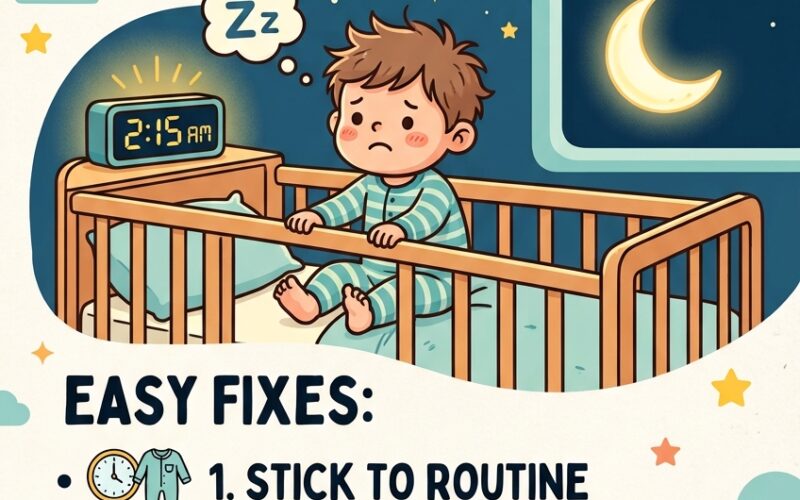
You thought you were out of the woods. You survived the 4-month sleep regression, navigated the 8-month slump, and finally enjoyed months of glorious, uninterrupted nighttime sleep. Then, seemingly overnight, your peaceful bedtime routine dissolves into a high-drama negotiation.
Your toddler is suddenly throwing epic tantrums at bedtime, climbing out of their crib, waking up multiple times during the night, or demanding “just one more story” for the fourth time.
If you are currently surviving on sheer willpower and cold coffee, take a deep breath: this is completely normal. Toddler sleep regressions are a universal parenting rite of passage. But more importantly, there is a core reason this happens—and a strategic way to resolve it quickly.
Here is the secret behind toddler sleep regressions, why they occur, and how to restore quiet nights to your household fast.
The Hidden Cause of Toddler Sleep Regressions
When baby sleep regressions happen, they are usually driven by physical development—like rolling, crawling, or teething. Toddler sleep regressions, which typically hit around 18 months and 2 years old, are fundamentally different.
The secret behind toddler sleep regressions comes down to three rapid developmental shifts occurring simultaneously:
1. The Surge in Cognitive Autonomy
Between 18 and 24 months, toddlers experience a massive leap in brain development. They realize for the first time that they are separate individuals from their parents. With this realization comes a strong desire for control and self-assertion. Bedtime becomes the primary battlefield because it is one of the few times of day where they can actively choose to resist.
2. Separation Anxiety Peak
As their imagination blossoms, toddlers begin to understand the concept of FOMO (Fear Of Missing Out). They know you are still awake outside their room doing interesting things without them. This cognitive milestone can trigger a sudden spike in separation anxiety, making the physical transition to sleep feel daunting.
3. Rapid Boundary Testing
Toddlers are natural scientists. They learn about their environment by testing limits: “If I ask for water, what happens? If I cry, will Mom come back into the room?” Bedtime offers a clear boundary, and your toddler’s brain is wired to test how firm that boundary actually is.
When you understand that bedtime resistance is a sign of healthy cognitive growth rather than deliberate misbehavior, it becomes easier to respond with calm, confident consistency.
5 Steps to Fix Toddler Sleep Regressions Fast
You do not have to wait weeks for a regression to pass. By making a few strategic adjustments, you can guide your toddler back into a healthy sleep pattern in a matter of days.
Step 1: Offer Control During the Day (To Prevent Fights at Night)
Since the root cause of bedtime resistance is a desire for autonomy, give your toddler controlled choices throughout the evening routine. This satisfies their need for independence before they ever set foot in the bedroom.
- Choice Examples: “Do you want the red or blue pajamas?” “Should we read this book first, or that one?”
- The Rule: Keep choices binary (two options only) so they feel empowered without becoming overwhelmed.
Step 2: Establish an Unshakable Bedtime Routine
Toddlers thrive on predictability. A structured 20-to-30-minute bedtime routine signals to their nervous system that it is time to wind down.
A sample high-yield evening flow includes:
- Warm bath or wash (signals body temperature drop, inducing sleepiness)
- Pajamas & teeth brushing
- Two short books
- Lullaby and final goodnight
Keep the order identical every night. Visual schedule charts with pictures can also help toddlers take ownership of their routine.
Step 3: Implement Clear, Loving Boundaries
When your toddler calls out or leaves their bed, your reaction sets the rules. If you negotiate, offer prolonged comfort, or yield to extra requests, the regression will linger.
Use the Silent Return Method:
- First time: Calmly walk them back to bed, tuck them in, and say a warm phrase: “It’s sleep time, I love you, you are safe.”
- Second time and beyond: Lead them back to bed silently with minimal eye contact and zero emotion.
Your neutral response communicates that nighttime is strictly for sleeping, not for social engagement or games.
Step 4: Audit Wake Windows and Nap Schedules
Sleep regressions are sometimes caused by schedule mismatches. Around 18 to 24 months, a toddler’s sleep needs shift:
- Average Total Sleep: 11–14 hours in a 24-hour period (including a nap).
- The Single Nap: Most toddlers transition to a single afternoon nap between 15 and 18 months. If your toddler is still taking two naps, it is time to consolidate to one.
- Cap the Nap: Limit afternoon naps to 2–2.5 hours max, and ensure they wake up by 2:30 PM so there is enough “sleep pressure” built up before bedtime.
Step 5: Address Room Environment and Nighttime Fears
Around age two, vivid imaginations take off, and fear of the dark can emerge. Make sure the room environment actively supports sleep:
- Nightlight: Use a dim, red or warm amber nightlight. Blue or cool white light disrupts natural melatonin production.
- White Noise: A continuous white noise machine masks household sounds and acts as a comforting sleep cue.
- Comfort Object: Allow a small lovey or stuffed animal (if age-appropriate) to help them self-soothe when they wake up between sleep cycles.
How Long Does a Toddler Sleep Regression Last?
With consistent boundaries, most toddler sleep regressions resolve within 3 to 7 days. However, if parents introduce new habits during the regression—such as laying in bed with the toddler until they fall asleep or letting them sleep in the adult bed—the disruption can turn into a months-long habit.
Stay steady, keep your responses predictable, and remember that this phase is temporary. By balancing firm boundaries with warm reassurance, you give your toddler the security they need to rest peacefully—and get your quiet evenings back.
