
As every parent of a toddler knows, keeping a tiny human entertained can feel like a full-time job. While social media is packed with elaborate sensory bins requiring three cups of dyed rice, five drops of essential oils, and an hour of cleanup, reality rarely permits such luxury. When you need 20 minutes to cook dinner, reply to an urgent work email, or simply drink a cup of coffee while it’s still warm, you need fast, hassle-free solutions.
The secret to keeping toddlers engaged without turning your home into a disaster zone lies in low-prep, low-mess activities. Toddlers don’t care about aesthetic perfection; they care about novelty, autonomy, and fine-motor challenges.
Below are 15 clever, stress-free activities using everyday household items that you can set up in under 5 minutes—and clean up in even less time.
1. Tape & Sticky Play (Zero Residual Cleanup)
Painter’s tape is secretly every toddler parent’s best friend. It sticks easily, leaves no sticky residue behind, and offers endless possibilities for fine-motor focus.
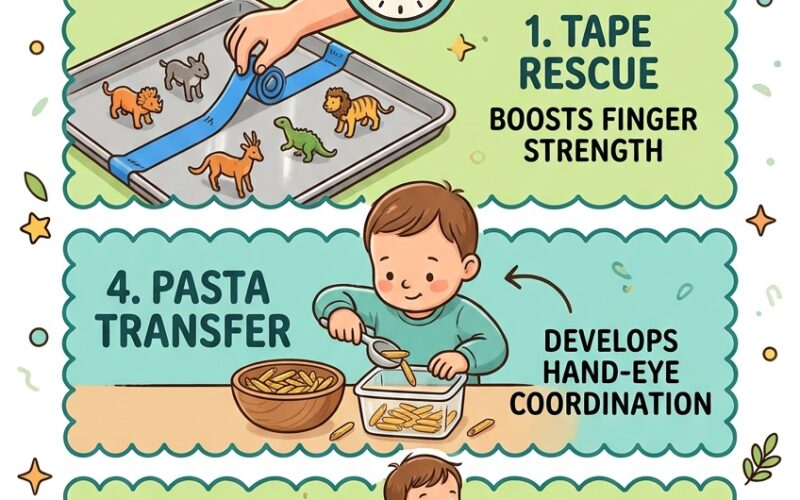
1. Animal / Toy “Tape Escape”
- Materials: Painter’s tape or masking tape, plastic animal figures or toy cars, baking sheet.
- Setup Time: 2 minutes.
- How to Play: Take a few of your child’s favorite plastic animal figures or toy cars and tape them securely down onto a baking sheet or hardwood floor using strips of painter’s tape. Tell your toddler the animals are “stuck” and need their help to break free. Peeling back the tape builds crucial finger strength, grip coordination, and problem-solving skills.
2. Color Sorting Pompom Drop
- Materials: Empty paper towel rolls, colorful pompoms, painter’s tape.
- Setup Time: 3 minutes.
- How to Play: Tape empty cardboard paper towel or toilet paper rolls vertically to a wall, door, or refrigerator at your toddler’s eye level. Place a small bowl of large pompoms underneath. Toddlers delight in dropping the pompoms through the tubes over and over again. To scale up the activity, color-code the tops of the tubes with markers so they can practice matching colors.
3. Post-It Note Symbol Match
- Materials: Colorful Post-It notes, butcher paper or cardboard, marker.
- Setup Time: 4 minutes.
- How to Play: Write simple letters, numbers, or shapes on Post-It notes and stick them around a hallway or wall. Draw matching symbols on a large piece of paper taped to the floor. Challenge your child to hunt down the sticky notes and match them to the corresponding symbols on the paper.
2. Mess-Free Sensory & Water Play
Sensory play doesn’t always have to involve glitter, slime, or loose grains that stay on your floor forever. You can deliver great tactile feedback with zero cleanup.
4. Mess-Free Ziploc Paint Bags
- Materials: Heavy-duty Ziploc freezer bag, 2–3 colors of washable paint, heavy duct tape or painter’s tape.
- Setup Time: 3 minutes.
- How to Play: Squirt a few dollops of different colored washable paint into a freezer Ziploc bag. Press out excess air, seal tightly, and tape all four edges down securely to a high chair tray or glass window. Toddlers can squish, spread, and blend colors with their fingers without getting a single drop of paint on their hands or your furniture.
5. Dry Pasta Transfer Station
- Materials: Uncooked penne or rigatoni pasta, measuring cups, spoons, plastic tub.
- Setup Time: 2 minutes.
- How to Play: Fill one shallow plastic bin with large, uncooked pasta shapes like penne or fusilli. Give your child measuring cups, scoops, and an empty container. Transferring items from one vessel to another develops hand-eye coordination and spatial awareness, and any spilled dry pasta is swept up in five seconds.
6. Kitchen Whisk Toy Extraction
- Materials: Wire kitchen whisk, large soft pompoms or small felt balls.
- Setup Time: 2 minutes.
- How to Play: Gently push colorful fabric pompoms into the wire cage of a standard kitchen whisk until full. Hand it to your toddler with the goal of pulling all the pompoms out. This simple pincer-grasp exercise keeps fingers nimble and minds focused for surprisingly long stretches.
7. The “Water Paint” Patio or Window
- Materials: Small cup of water, thick paintbrush, glass window or dark patio concrete.
- Setup Time: 1 minute.
- How to Play: Give your child a small container filled with an inch of plain tap water and a clean paintbrush. Let them “paint” water designs onto a glass patio door, low window, or dark construction paper. As the water evaporates, their artwork disappears, giving them a blank canvas to paint over again.
💡 Pro-Parent Tip: Keep an “Activity Basket” stocked with painter’s tape, a package of Post-It notes, and a bag of large pompoms in a top cabinet. Having these essentials pre-grouped makes setting up play completely seamless!
3. Fine-Motor & Sorting Challenges
Toddlers love logic games and sorting tasks because they offer a clear objective and immediate feedback.
8. Colander & Pipe Cleaner Hedgehog
- Materials: Kitchen colander, colorful chenille pipe cleaners.
- Setup Time: 2 minutes.
- How to Play: Turn a plastic or metal colander upside down. Show your toddler how to poke pipe cleaners through the tiny holes. They can build a colorful “hedgehog” by pushing them in or practice pulling them through from the other side. It’s an exceptionally calming, meditative task for active toddlers.
9. Sticky Wall Canvas
- Materials: Contact paper (clear shelf liner), painter’s tape, tissue paper or yarn scraps.
- Setup Time: 4 minutes.
- How to Play: Tape a square of clear contact paper to the wall with the sticky side facing outward. Hand your toddler light craft scraps, such as yarn pieces, tissue paper, or cut-out felt shapes. They can press items onto the wall and rearrange them independently without glue.
10. Sticker Line Tracing
- Materials: Butcher paper or postal paper, Sharpie, large dot stickers.
- Setup Time: 3 minutes.
- How to Play: Unroll a strip of paper on the floor and draw thick, squiggly, or zigzagging lines using a bold marker. Give your toddler a sheet of inexpensive dots or stickers and instruct them to place the stickers directly along the path of the lines.
11. Ice Cube Tray Fine-Motor Sorting
- Materials: Empty ice cube tray, large buttons/beads, wooden spoon or plastic tongs.
- Setup Time: 2 minutes.
- How to Play: Place an empty ice cube tray on the table along with a bowl of oversized beads, giant buttons, or felt balls. Provide a small pair of plastic kitchen tongs or a spoon. Toddlers will practice controlled precision as they fill each individual compartment.
4. Gross-Motor Energy Burners (Indoor Friendly)
When bad weather strikes, toddlers still need to burn off physical energy without destroying the living room.
12. Painter’s Tape Floor Balance Beam
- Materials: Painter’s tape.
- Setup Time: 3 minutes.
- How to Play: Press long lines of tape across your living room rug—zigzag patterns, spirals, or straight lines work best. Tell your child it’s a tightrope over a river or a balance beam. Ask them to walk strictly along the tape lines from end to end without slipping off.
13. Cushion Island Hop
- Materials: Couch cushions, throw pillows.
- Setup Time: 2 minutes.
- How to Play: Arrange couch cushions and throw pillows across the floor, spacing them just far enough apart for little legs. Tell your toddler the floor is hot lava and they must hop safely from island to island. This burns indoor energy while improving dynamic balance.
14. Balloon Keepy-Uppy
- Materials: Single inflated latex balloon.
- Setup Time: 1 minute.
- How to Play: Blow up a single latex balloon (ensure adult supervision). Challenge your toddler to keep the balloon from touching the ground using only their hands, feet, or head. Because balloons float down slowly, it provides ample reaction time for young toddlers while encouraging non-stop movement.
15. Cardboard Box Driving Station
- Materials: Large empty cardboard shipping box, markers, paper plate.
- Setup Time: 4 minutes.
- How to Play: Place your child inside a large, empty shipping box. Hand them a paper plate as a steering wheel and draw a simple dashboard inside with a marker. Toddlers will happily sit inside their “race car” or “spaceship,” pressing drawn buttons and steering for 20 minutes straight.
Why Low-Mess Independent Play Matters for Toddlers
Early childhood development experts emphasize that open-ended, child-led play is essential for cognitive growth, self-regulation, and executive functioning. You don’t need expensive toys or elaborate, messy setups to spark curiosity. Simple household setups encourage young children to experiment, problem-solve, and build independence—all while keeping your sanity and your home intact.
Key Takeaways for Success:
- Keep choices limited: Too many materials cause sensory overload. 3–5 items per activity is the sweet spot.
- Rotate activities weekly: Putting an activity away for 10 days makes it feel brand new when re-introduced.
- Embrace process over perfection: It doesn’t matter if they don’t follow the “rules” of the setup—exploration is the goal!
