
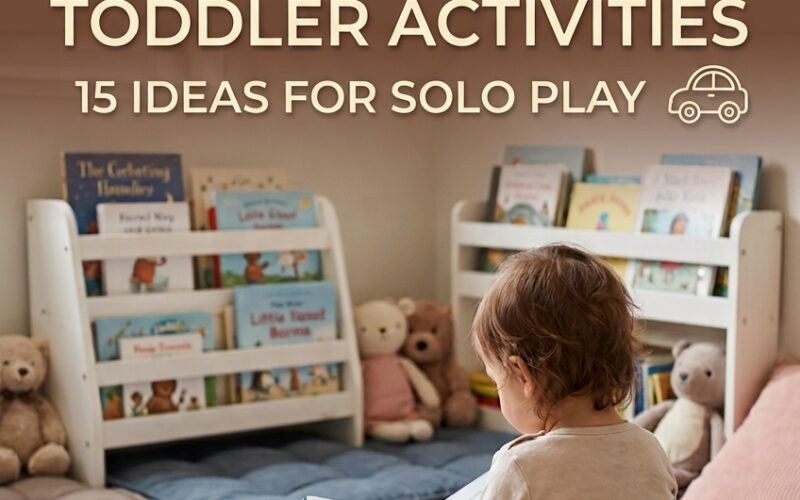
Discover 15 easy, low-mess quiet toddler activities that encourage independent play. Keep your little one entertained without screen time!
Every parent knows the golden value of twenty uninterrupted minutes. Whether you need to make dinner, finish a work call, or simply sit down with a hot coffee, teaching your toddler to play independently is a true lifesaver.
Independent play is not just a luxury for parents; it is a critical developmental skill for toddlers. It fosters problem-solving abilities, focus, self-regulation, and creativity. However, getting a 2- to 4-year-old to play on their own without turning to screens can feel like an uphill battle.
The secret? Low-prep, quiet activities with open-ended materials. Here are 15 simple, low-mess toddler activities designed to encourage focus and keep your child happily engaged on their own.
Low-Mess & Fine Motor Activities
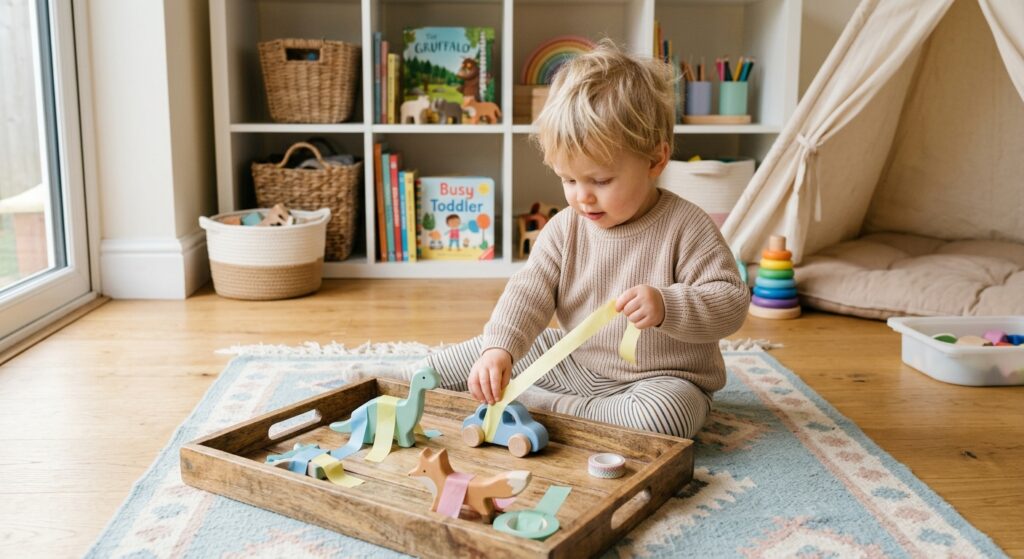
1. The Painter’s Tape Rescue Mission
Take a few of your toddler’s favorite small plastic animals, toy cars, or chunky puzzle pieces and tape them down to a baking sheet or hardwood floor using painter’s tape.
- Why it works: Toddlers love the satisfying peel of tape, and working to free their toys keeps fine motor skills engaged for ages.
2. Post-It Note Wall Match
Write simple shapes, letters, or matching colors on Post-it notes and stick them across a wall or hallway door. Draw corresponding targets on a large piece of butcher paper taped at their height.
- Why it works: Moving between the wall and the paper turns a quiet visual-matching game into a low-energy physical activity.
3. Pom-Pom Tube Drop
Painter’s tape two or three cardboard paper towel tubes vertically to a wall or glass door at varying angles. Place a bowl of colorful pom-poms underneath.
- Why it works: The simple repetition of dropping pom-poms down the chute and watching them emerge at the bottom is endlessly fascinating to young minds.
4. Pipe Cleaner & Colander Sorting
Turn an everyday stainless steel or plastic kitchen colander upside down and give your toddler a handful of colorful pipe cleaners. Show them how to poke the ends through the tiny holes.
- Why it works: This activity requires concentration and precision, making it an extraordinarily quiet option for rest time.
5. Card Slot Drop
Cut small slots into the plastic lid of a recycled oatmeal container or coffee tub. Give your child a stack of old playing cards or thick cardboard cutouts to push through the slots.
- Why it works: Pushing objects into container slots satisfies a toddler’s natural “schema” for enclosing and posting objects.
Sensory & Tactile Quiet Play
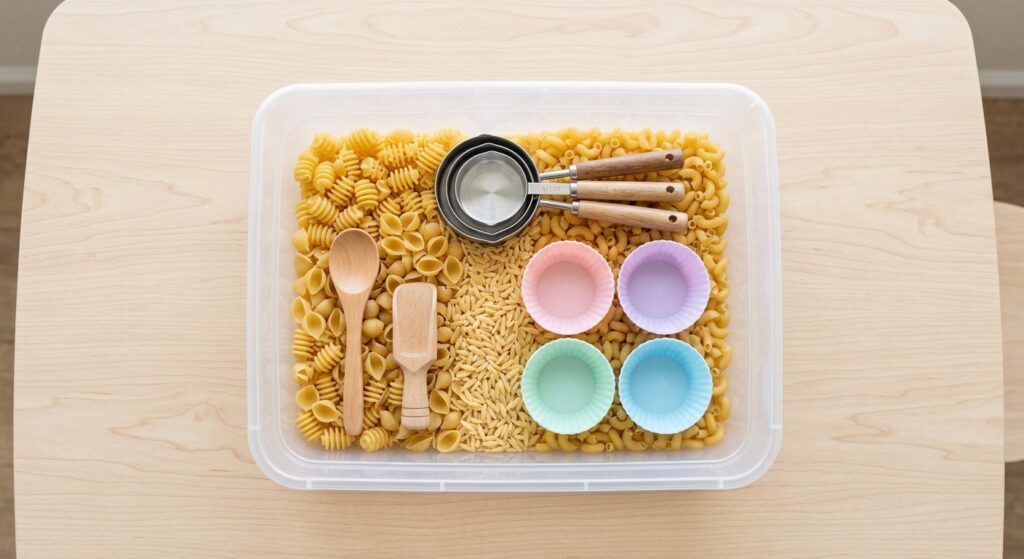
6. Dry Pasta & Scoop Bin
Fill a shallow plastic storage bin with dry sensory bases like giant pasta shells, dry rolled oats, or large dried beans. Toss in a few measuring cups, wooden spoons, and small silicone muffin liners.
- Why it works: Pouring, scooping, and transfer work naturally calms a toddler’s nervous system.
7. Mess-Free Color Mixing Bags
Fill a sealable Ziploc bag with a few squirts of washable tempera paint (for example, primary colors like blue and yellow). Seal the bag firmly, reinforcing the top edge with duct tape, and tape it flat to a window or tabletop.
- Why it works: Children can squish, trace patterns, and mix colors without getting a single drop of paint on their hands or your furniture.
8. Aluminum Foil Sculptures & Wrap
Give your child a roll of standard aluminum foil cut into small sheets, along with a few plastic figures. Let them wrap the toys up like little presents or crumple the foil into shapes.
- Why it works: The tactile feedback and crinkly sound of foil provide fantastic sensory engagement.
9. Sticky Wall Canvas
Tape a piece of clear contact paper to the wall with the sticky side facing outward. Set out a small basket of light items like tissue paper squares, feather cutouts, or yarn scraps.
- Why it works: Toddlers can press objects onto the wall and reposition them endlessly without needing glue or tape.
Creative & Imaginary Solo Play
10. Toy Car Wash Station
Set up two small plastic tubs on a large towel on the kitchen floor. Fill one with warm soapy water and a small sponge, and leave the second one with clean water for rinsing. Give them their plastic toy trucks or animals.
- Why it works: Water play keeps toddlers engaged longer than almost any other medium. The towel catches stray drips, keeping cleanup fast.
11. Sticker Line Tracing
Draw a few simple squiggly, straight, or zig-zag lines on a piece of paper using a dark marker. Hand your toddler a sheet of inexpensive dot stickers and ask them to “cover the line.”
- Why it works: Placing stickers directly along a line builds pre-writing skills while keeping hands busy.
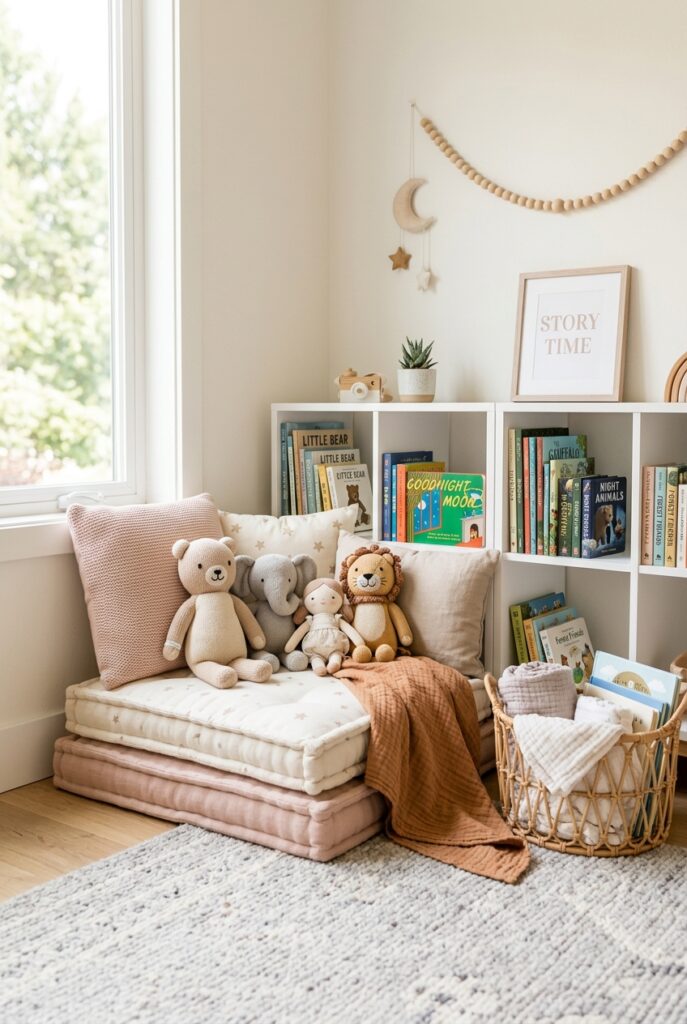
12. Book Hospital & Blanket Nook
Build a quick pillow fort or drape a blanket over a small table. Give your child a flashlight, a stack of their favorite picture books, and a couple of stuffed animal “patients” to read to.
- Why it works: Creating a cozy, enclosed space makes quiet reading feel like a special adventure.
Building & Logic Setups
13. Magnetic Tile Light Play
If you have translucent magnetic building tiles, set up your child near a glass sliding door or low window. Encourage them to build flat patterns or 3D structures directly against the glass.
- Why it works: Sunlight streaming through colorful tiles turns simple building into a mesmerizing visual project.
14. Puzzle Piece Hunt
Hide 5 to 10 chunky wooden puzzle pieces around a single room in plain sight (on a chair cushion, under a rug corner, on a low shelf). Leave the empty puzzle board on the floor as home base.
- Why it works: It turns a standard puzzle into an active, self-guided treasure hunt.
15. Window Cling Storytelling
Inexpensive gel or vinyl window clings are perfect for glass doors or windows. Your child can create scenes, stack them, and peel them off without leaving residue behind.
- Why it works: Window clings are reusable, durable, and naturally quiet.
Tips for Building Independent Play Stamina
- Start Small: If your toddler is used to constant adult interaction, start with 5 to 10 minutes of solo play and gradually build up.
- Rotate Toys: Keep these specific quiet-time activities put away in a high cupboard. Bringing them out only during quiet time maintains novelty.
- Resist the Urge to Intervene: If your child is happily playing “incorrectly” (like stacking cars instead of rolling them), let them be! Uninterrupted exploration is the goal.
Which activity will you try first today?
