
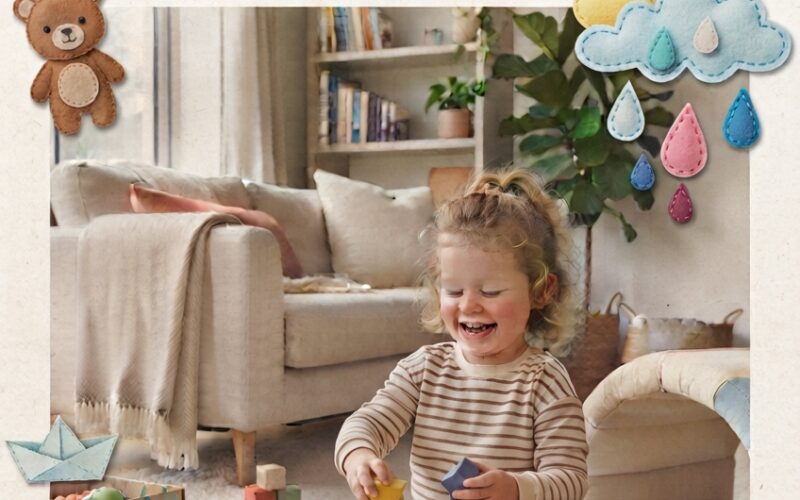
Rainy days can make it difficult for toddlers to burn off their energy outdoors. After a while, staying inside may lead to boredom, endless requests for screen time, and a living room full of toys that no longer seem interesting.
The good news is that you don’t need expensive toys or complicated preparations to keep your little one entertained. Everyday household items, a little imagination, and a few simple games can turn an ordinary afternoon into an exciting adventure.
These 10 easy indoor activities for toddlers on rainy days encourage creativity, movement, sensory exploration, and early learning. Most require only a few minutes of preparation, making them ideal for busy parents who want to keep their toddlers happy at home.
1. Build a Cushion Obstacle Course

Turn your living room into a mini adventure course using cushions, pillows, and folded blankets.
What you’ll need:
- Sofa cushions and pillows
- A soft blanket
- A clear, safe floor space
Steps:
- Place cushions on the floor to create a simple path.
- Add a folded blanket as a small obstacle to step over.
- Encourage your toddler to walk around the pillows or crawl between them.
- Cheer your child on as they reach the finish line.
This activity helps develop balance, coordination, and gross motor skills. Keep obstacles low and soft, and supervise your toddler throughout the game.
2. Have a Color Sorting Game

A simple color sorting game can turn everyday playtime into an early learning opportunity.
What you’ll need: Large colored cups, chunky blocks, or other toddler-safe toys.
Steps:
- Choose two or three colors to start with.
- Place the toys in a small pile on the floor.
- Ask your toddler to put the red objects together, then the blue ones.
- Name each color aloud and celebrate every attempt.
Don’t worry if your child mixes up the colors. The goal is to explore, listen, and learn through play rather than get every answer right.
3. Create a Cardboard Box Adventure
Have an empty cardboard box? Before recycling it, transform it into a pretend car, house, or little shop.
What you’ll need: A clean cardboard box, washable crayons, and paper.
Steps:
- Choose a box with no staples or sharp edges.
- Let your toddler decorate the outside with large crayons.
- Add pretend steering wheels, windows, or a door using adult-drawn shapes.
- Invite your child to pretend to drive, deliver packages, or visit a make-believe house.
This activity encourages imagination, language development, and creative expression. An adult should cut any openings beforehand and supervise play.
4. Make a Toddler-Friendly Art Station

Art is a wonderful way for toddlers to experiment with colors and express themselves.
What you’ll need: Large washable crayons, large sheets of paper, and a child-sized table or washable floor mat.
Steps:
- Secure the paper to the table so it doesn’t slide.
- Offer two or three chunky crayons.
- Encourage your toddler to make lines, circles, and colorful marks.
- Ask simple questions such as, “What color are you using?”
Avoid small art supplies and supervise closely to prevent crayons from being mouthed. Displaying your child’s artwork afterward can make the experience even more rewarding.
5. Organize a Toy Treasure Hunt
A treasure hunt gives toddlers a reason to move around and practice following simple instructions.
What you’ll need: Five to eight familiar, age-appropriate toys.
Steps:
- Choose a few toys your toddler enjoys.
- Place them in easy-to-find locations around one safe room.
- Give clues such as, “Can you find the teddy bear near the sofa?”
- Celebrate together each time a toy is discovered.
For younger toddlers, point toward the hiding place or use simple visual clues. Keep toys away from stairs, electrical outlets, and unstable furniture.
6. Try a Simple Indoor Bowling Game
You don’t need a bowling set to enjoy this activity. Empty plastic bottles or lightweight stacking pins work well.
What you’ll need: Lightweight plastic bottles and a soft, large ball.
Steps:
- Place three to five empty bottles in a triangle.
- Mark a starting line a short distance away.
- Show your toddler how to roll the ball toward the bottles.
- Reset the pins and take turns.
Indoor bowling helps toddlers practice hand-eye coordination and learn cause and effect. Use only lightweight equipment and a soft ball, and keep the play area clear.
7. Explore a Sensory Basket
Sensory play allows toddlers to explore different textures, shapes, and everyday objects.
What you’ll need: A shallow basket and several large, safe household items, such as a washcloth, a large silicone spoon, and a soft fabric toy.
Steps:
- Place three or four objects in the basket.
- Sit with your toddler and invite them to explore each item.
- Describe what you notice: “This cloth is soft,” or “The spoon feels smooth.”
- Let your child choose which object to explore next.
Choose items that cannot break into small pieces, and avoid loose sensory materials that could be swallowed. Stay within arm’s reach and supervise continuously.
8. Have a Toddler Dance Party
When the weather keeps everyone indoors, music is an easy way to get moving.
What you’ll need: A playlist of children’s songs and a clear floor space.
Steps:
- Play a favorite song at a comfortable volume.
- Show your toddler simple movements, such as clapping, marching, or swaying.
- Pause the music occasionally and invite your child to freeze.
- Let your toddler choose the next song or movement.
Dancing supports coordination, rhythm, and listening skills. Keep the floor dry and clear, and avoid jumping on furniture.
9. Build a Blanket Reading Fort
Create a cozy corner where your toddler can relax with favorite books.
What you’ll need: A blanket, a few cushions, and two or three picture books.
Steps:
- Drape a lightweight blanket over a stable, low structure or create a cozy corner using cushions.
- Arrange a few books inside the space.
- Let your toddler choose which story to read first.
- Point to pictures, make animal sounds, and ask simple questions.
Reading together supports vocabulary, attention, and bonding. Make sure the fort has plenty of ventilation, never cover your toddler’s face, and avoid unstable structures.
10. Create a Simple Pretend Kitchen
Toddlers love copying the activities they see adults doing every day. A pretend kitchen lets them imitate familiar routines safely.
What you’ll need: A few large plastic bowls, a large wooden or silicone spoon, and a play kitchen if available.
Steps:
- Set the bowls and spoon on a low, stable surface.
- Pretend to stir an imaginary soup or prepare a make-believe meal.
- Ask your toddler to serve food to stuffed animals.
- Introduce words such as “mix,” “pour,” “full,” and “empty.”
This activity encourages imaginative play, communication, and early problem-solving. Use unbreakable items and keep real food, hot liquids, knives, and cleaning products out of reach.
Tips for Keeping Toddlers Engaged on Rainy Days
You don’t need to complete all ten activities in one day. Toddlers often enjoy repeating their favorite games, and their attention spans can vary considerably.
Try these simple strategies:
- Rotate toys: Put some toys away and bring them out another day to make them feel new.
- Keep activities short: Start with 5–15 minutes and follow your child’s interest.
- Mix active and quiet play: Alternate dancing or obstacle courses with reading and drawing.
- Let your toddler help: Simple jobs, such as putting blocks into a basket, make children feel involved.
- Follow your child’s lead: If an activity isn’t working, switch to something else without pressure.
- Prioritize safety: Supervise closely, avoid choking hazards, and keep play areas clear.
Conclusion
Rainy days don’t have to mean a boring day indoors. With a few household items and a little creativity, you can offer your toddler opportunities to move, explore, create, and learn without leaving home.
From cushion obstacle courses to cozy reading forts, these 10 easy indoor activities for toddlers on rainy days make it easier to fill your day with meaningful play. Choose one or two that suit your child’s mood, join in whenever you can, and remember that the simplest activities often become the most memorable.
